Nordic biomass CHP: ammonia HP lifts ~35°C flue heat to 65–95°C DH
Anonymized public project: four ammonia heat pumps recover biomass CHP flue condensation heat for district heating, with seasonal supply temperatures.
Engineering data
- Case type
- Anonymized field reference
- Data status
- anonymized_field_reference
- Industry
- District heating
- Source temperature
- 35–40°C
- Sink temperature
- 65–95°C
- Temperature lift
- ≈ 25 K
- Heating or cooling duty
- Not disclosed
- Architecture
- Multi-unit ammonia screw heat pumps (incl. high-pressure stage)
- Result status
- Stable DH supply from flue condensation heat; reduced peak-boiler runtime
- Key risk
- Ammonia plant-room safety; high-pressure design; winter peak coverage
- Existing system
- Biomass CHP with peak boilers; low-grade flue heat partly rejected
- Refrigerant
- R717 (ammonia)
- COP
- 4–4.5
- Annual savings
- Reported first heating season ~80,000 MWh heat delivery; ~20 kt/y CO₂ cut (public summary)
- Estimated payback
- Not disclosed
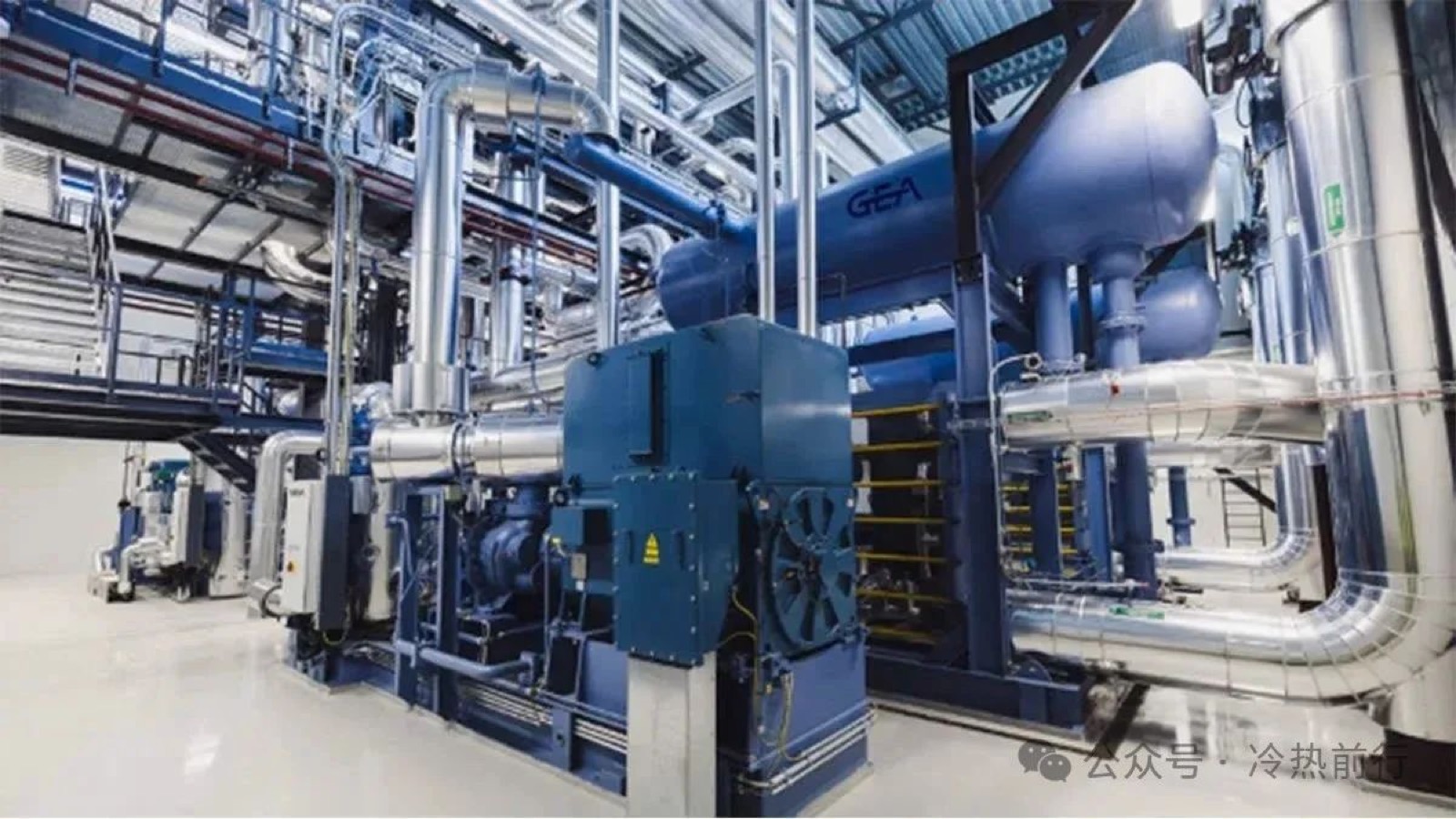
Project background
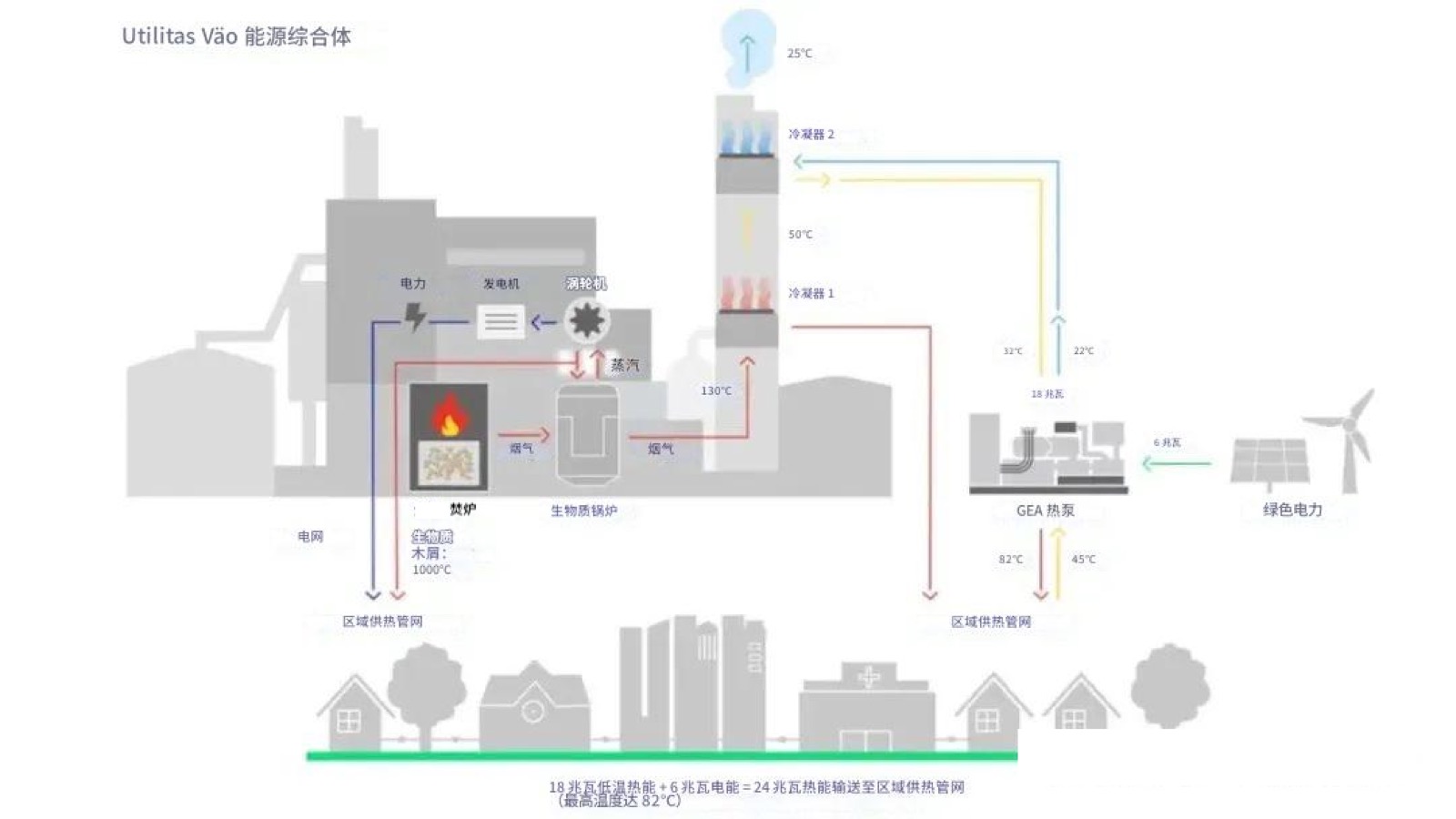
A Nordic municipal energy complex needed more district-heating capacity from an existing biomass CHP site. Low-grade flue heat around 35°C was available after condensation stages but previously contributed little to useful network temperatures.
Source / inputs
Source ≈35°C after secondary flue condenser. Sink 65°C in summer, 85°C typical winter, up to ~95°C on extreme demand. Natural refrigerant ammonia. Figures from public project summaries—customer names omitted.
Heat pump solution
Four ammonia screw heat pumps, including a high-pressure stage for winter network temperatures. Seasonal controls modulate leaving-water setpoints; the train recovers flue condensation heat that would otherwise be rejected.
COP & savings
Public summary cites COP above 4 and first-season heat delivery on the order of 80 GWh, with multi-ten-thousand-ton annual CO₂ reduction. Treat as reported operating claims, not an Open Thermal AI field audit.
Investment / ROI notes
CAPEX/payback not disclosed in the public summary. Value case is boiler displacement and carbon reduction on a large DH load.