Central China meat plant B: ammonia HP for plant hot water — coupling & ops lessons
Author field survey (2024-05): same ammonia HP architecture as plant A at a second Central China meat site; plant-reported ~200–300 m³/day hot water and ~¥100k/month steam savings, plus liquid-path and cleanliness lessons.
Engineering data
- Case type
- Anonymized field reference — engineering experience without publishable raw data
- Data status
- Anonymized field reference
- Data source
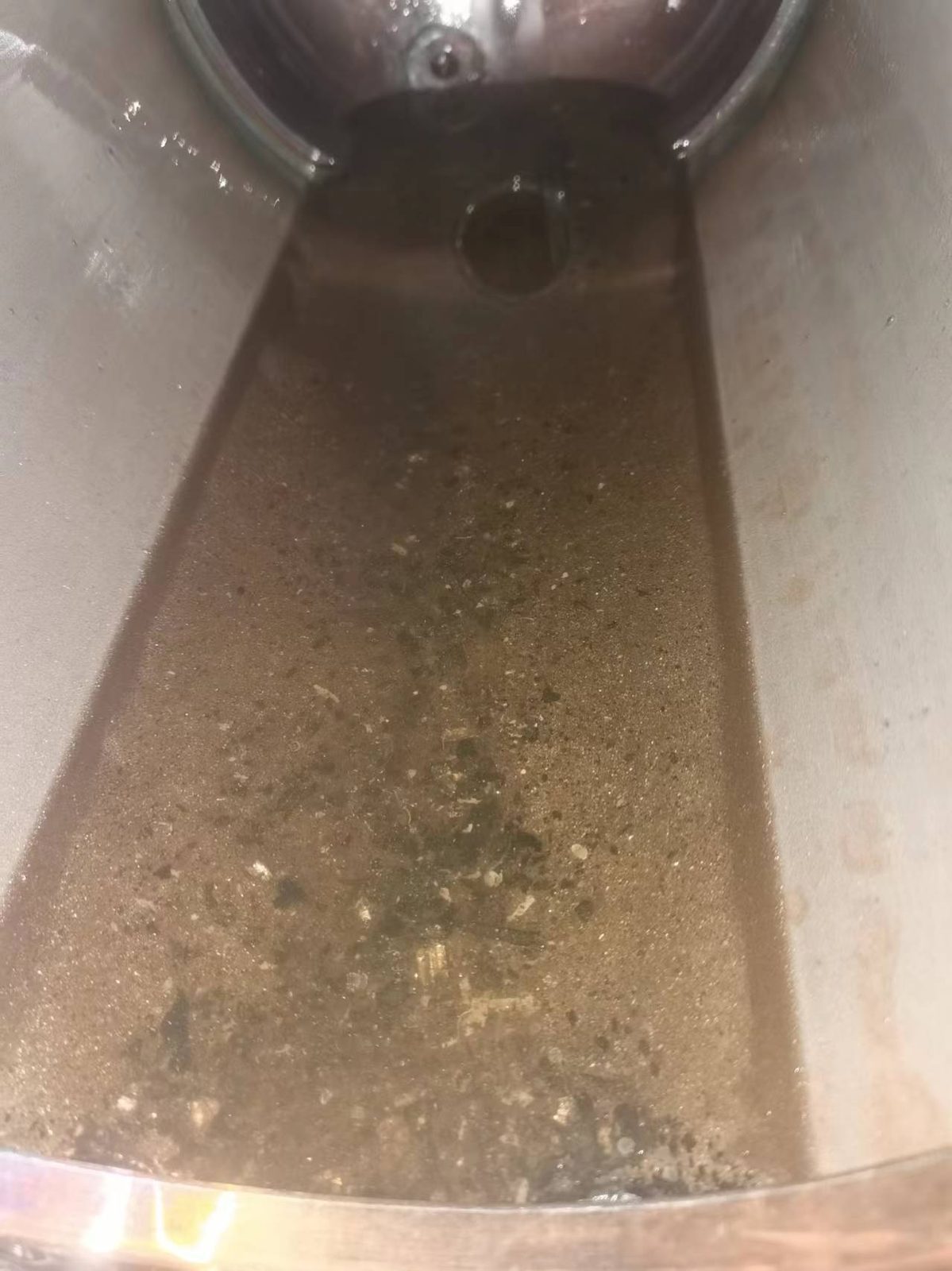
- Author site survey notes (2024-05); plant-reported hot-water volume and steam-cost savings; anonymized field photographs of package, piping, HMI, and oil/seal observations
- Reviewer / date
- Editorial (Open Thermal AI) · 2026-11-02
- Industry
- Food
- Source temperature
- 28–35°C
- Sink temperature
- 50–70°C
- Temperature lift
- ≈ 15 K
- Heating or cooling duty
- Not disclosed
- Architecture
- Ammonia mid-temperature heat pump; liquid drain should enter the auxiliary receiver (winter oil-cooler feed) rather than only the main receiver
- Result status
- May 2024 survey record: Overall operation reported as good; plant continues to displace purchased steam for hot water
- Key risk
- First-year oil change; shaft-seal leak monitoring; installation cleanliness (strainer impurities); plant suggestion of a discharge-header sensible-heat exchanger (80→65°C ammonia / free water lift) is unverified
- Existing system
- Purchased steam for process hot water; ammonia refrigeration available as reject-heat source
- Refrigerant
- R717 (ammonia)
- COP
- Not disclosed
- Annual energy / emissions savings
- Plant-reported: ~¥100k/month steam-cost savings vs purchased steam — not independently metered here
- Estimated payback
- Not disclosed as a verified figure
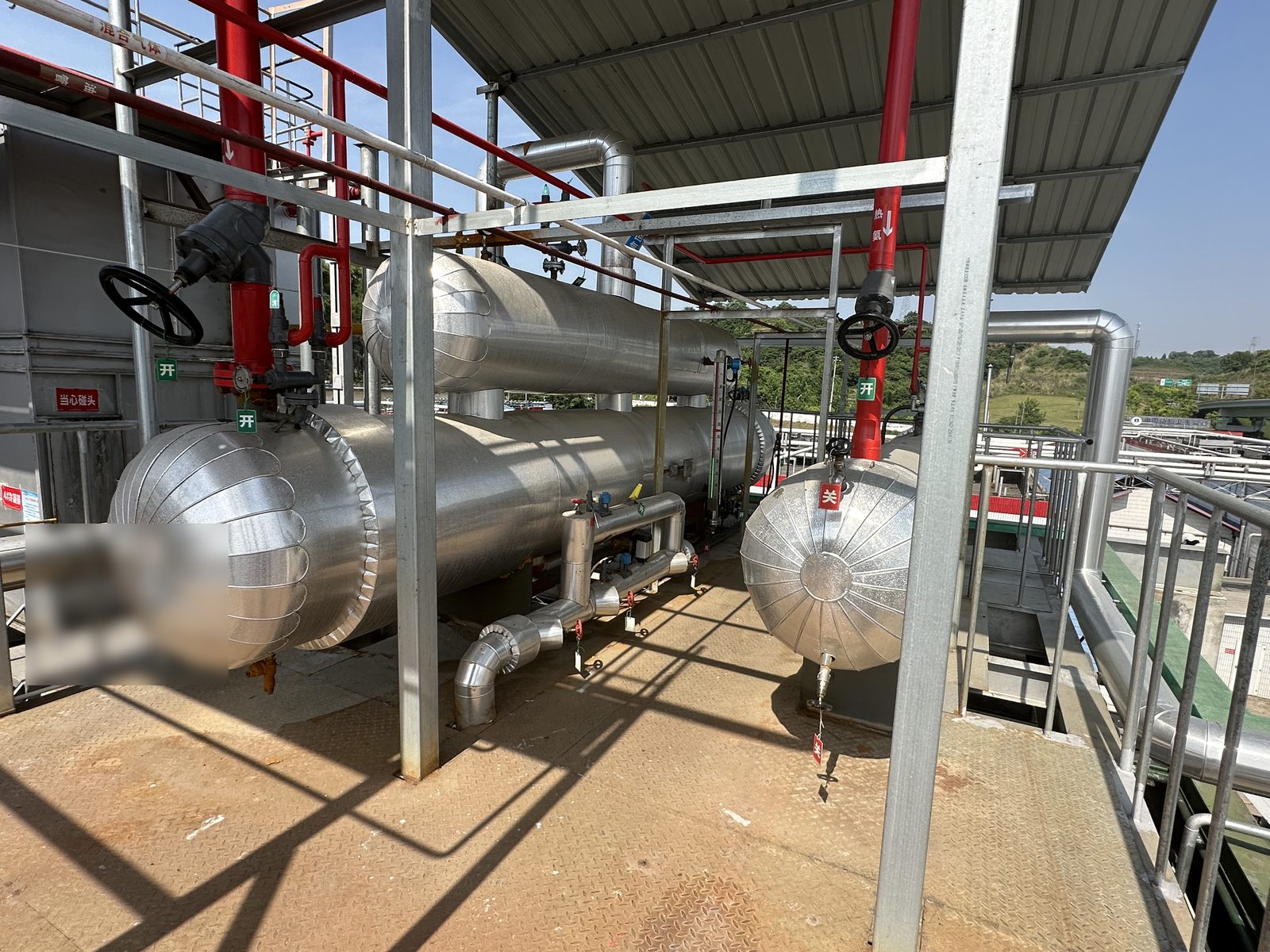
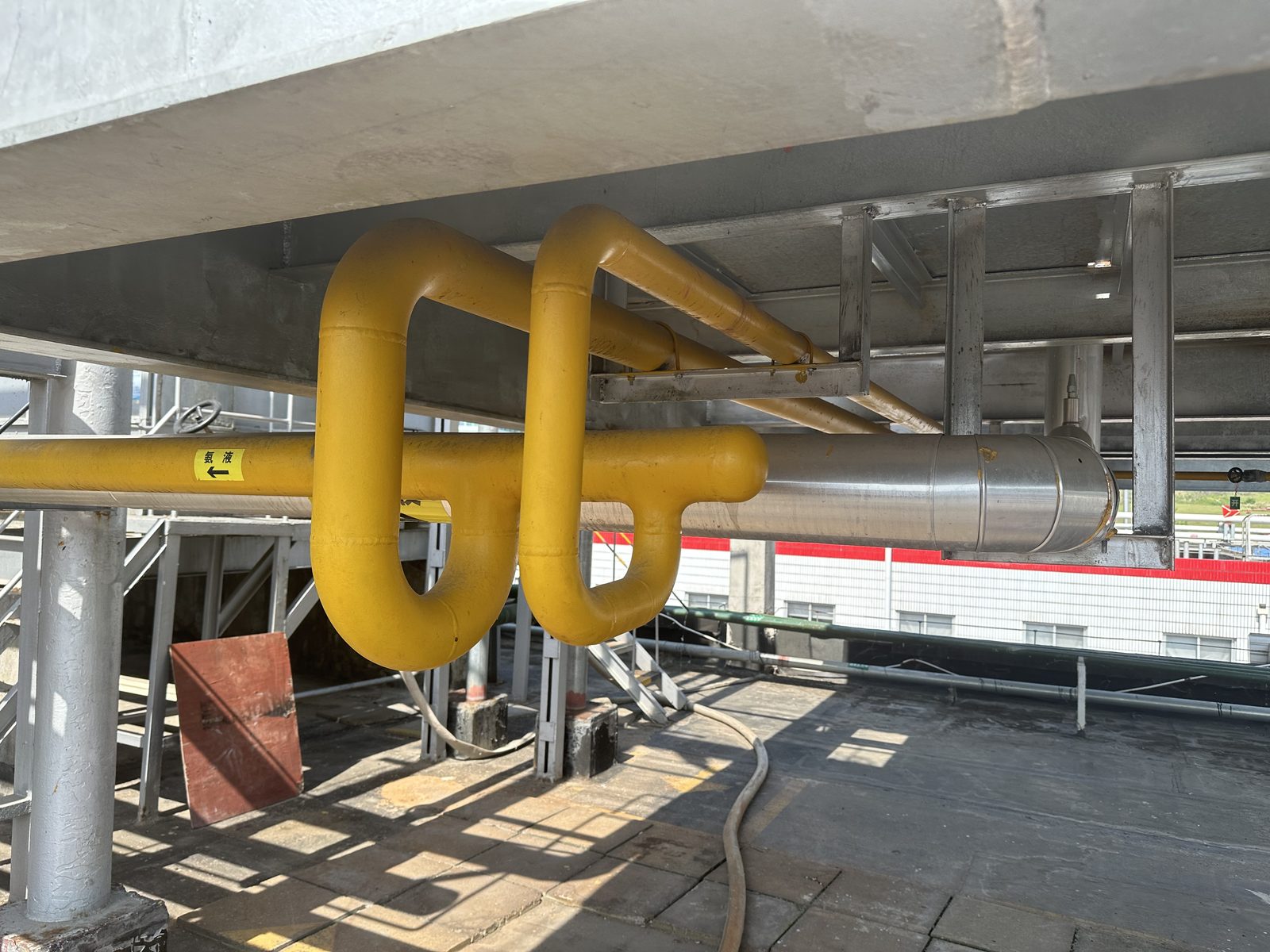
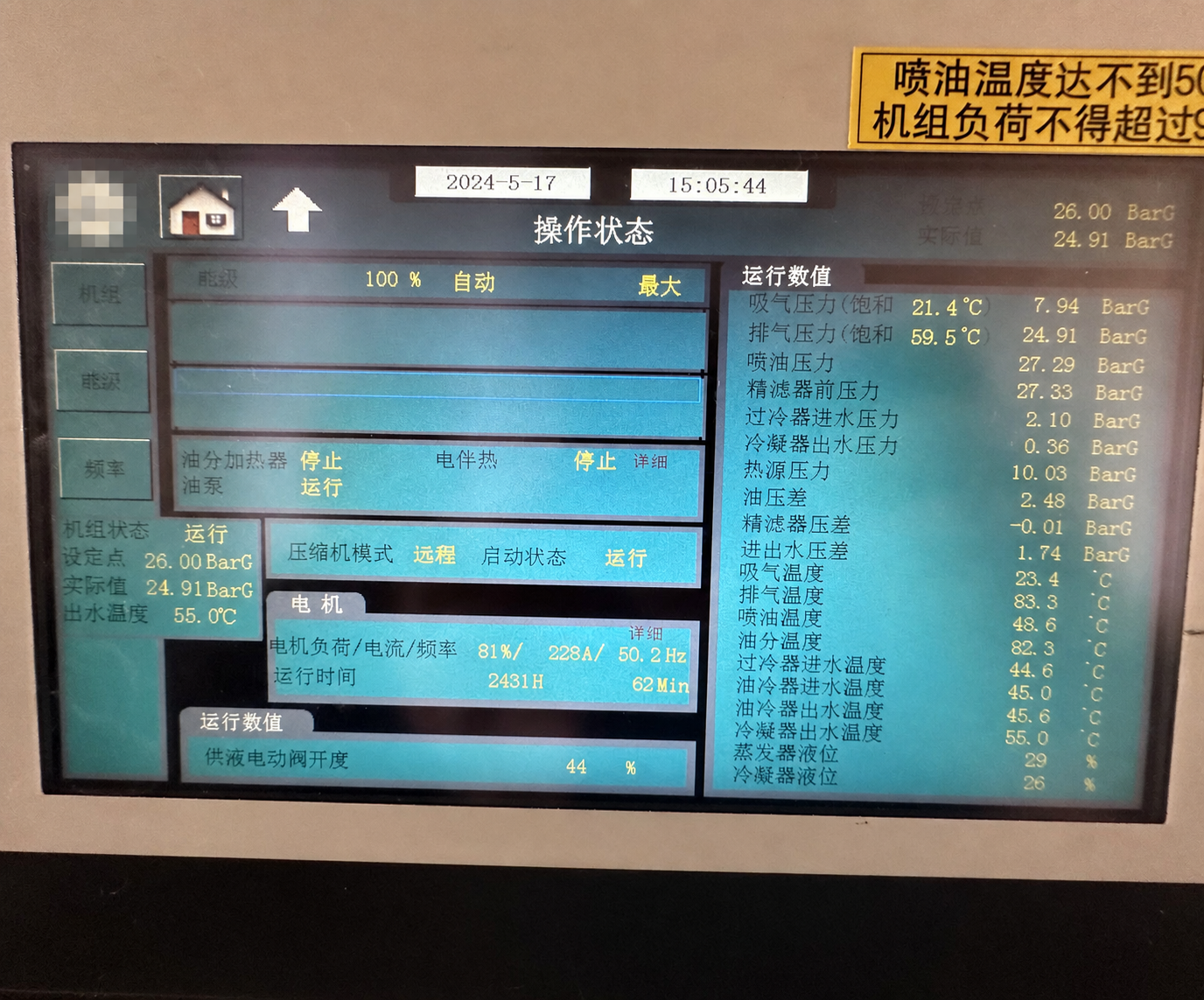
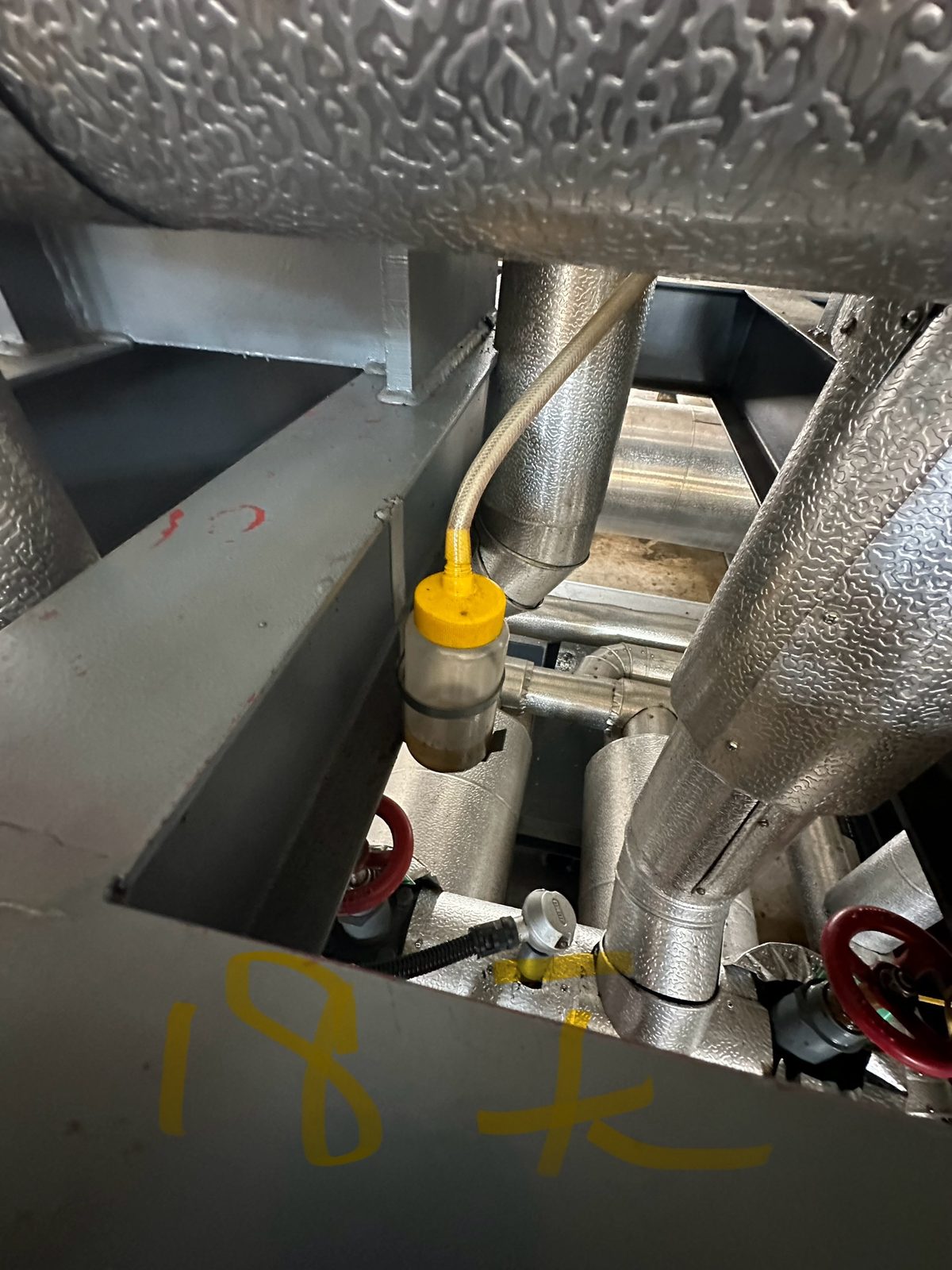
Project background
A second Central China meat-processing site runs an ammonia heat pump coupled to plant refrigeration for process hot water. The author surveyed the installation in May 2024 (day after plant A). Customer identity is omitted.
Narrative inputs
Source: ammonia discharge / condenser heat. Sink: plant hot water, plant-reported ~200–300 m³/day. No independent heating-capacity or COP table is published here.
Heat pump solution
Same architecture family as plant A: ammonia HP with preheater + condenser-evaporator. Field notes stress routing liquid drain into the auxiliary receiver so winter oil-cooler feed remains available, separating make-up and hot-water connections to the tank, and improving shop cleanliness during install.
COP & savings
Field survey by the author; daily hot-water volume and monthly steam savings as reported by the plant — not independently metered on this site. HMI and leak/oil photos are observational ops evidence only.
Investment / ROI notes
Plant-reported ~¥100k/month steam savings. CAPEX / payback were not confirmed as publishable verified figures for this site. Treat economics as site-reported.
FAQ
Why publish plant B separately from plant A?
Same technology family, different site scale (hot-water volume) and distinct ops lessons (auxiliary-receiver liquid path, strainer cleanliness, shaft-seal monitoring). Keeping them separate avoids mixing site-reported figures.
Is the plant’s proposed discharge-header heat exchanger included as proven?
No. It is recorded as a plant suggestion (sensible-heat recovery 80→65°C ammonia with free water temperature lift) and is not independently verified in this publication.
What should another plant verify before using this case?
Verify refrigeration operating conditions, hot-water temperatures and flow, simultaneous demand, electricity and displaced-heat costs, auxiliary power, backup heat and maintenance. Retain the safety review of the live ammonia system. This anonymized field reference does not establish your plant’s COP, net savings or payback; those require site-specific measurements and engineering review.
What changed in the 2 November 2026 review?
This was an editorial review, not a repeat site visit. No new author field record was supplied. The May 2024 observations and plant-reported savings remain historical, anonymized references; current operation and savings need a new authorized follow-up.