Heat pump basics · Enclosure & 鈑金
機櫃 & sheet-metal knowledge guide
The cabinet is not “paint and panels”—it is a structural, grounding, and serviceability shell that also shapes EMC and cable life. A neat door that blocks coil access, or power and signal sharing one tray, fails as downtime and nuisance trips. Pair with electrical & controls and 管路; this page focuses on frame, sheet metal, and cable practice.
1 · 框架與鈑金外殼的角色
強度、接地與檢修通道是同一設計——不是噴漆車間臨時加裝的三件事後補丁。
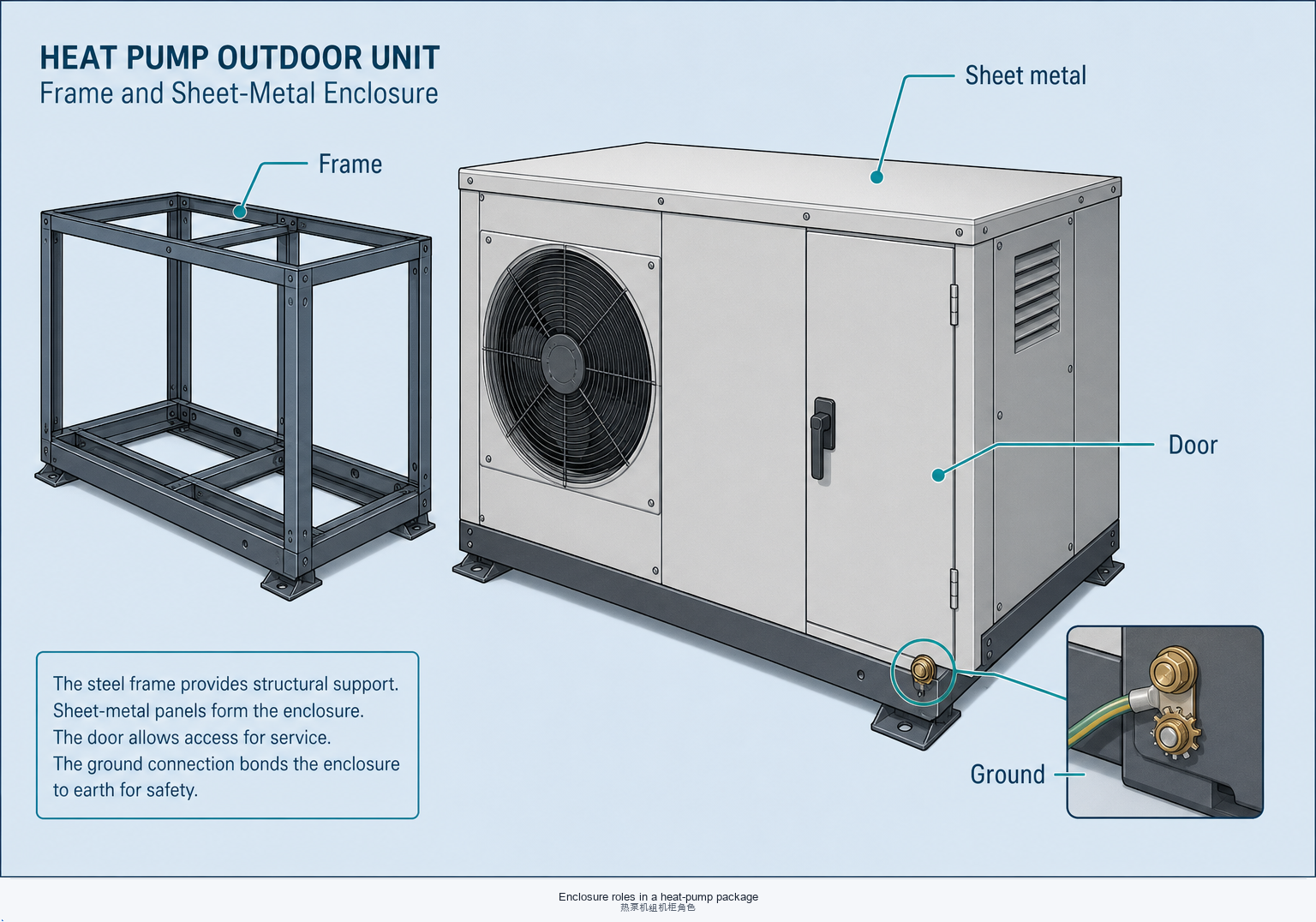
Strength & mounting
框架承受壓縮機質量、振動、運輸載荷,以及規定時的抗震或風載。面板抖響是剛度與緊固問題,不只是外觀。
Grounding & bonding
門、面板與導軌需有意搭接,使保護地與 EMC 迴流在開蓋時仍連續。無跨接的噴漆搭接是典型間歇接地故障。
可維護性
過濾器、閥門、電子膨脹閥與端子須可觸及,而不必拆製冷迴路。爲戴手套的技師設計——不只爲卸下面板的宣傳照。
2 · 框架、鈑金、門與 IP 直覺
幾何與密封決定耐候與聲學表現。IP 是試驗條件——不保證現場每個接頭與縫隙都與彩頁一致。
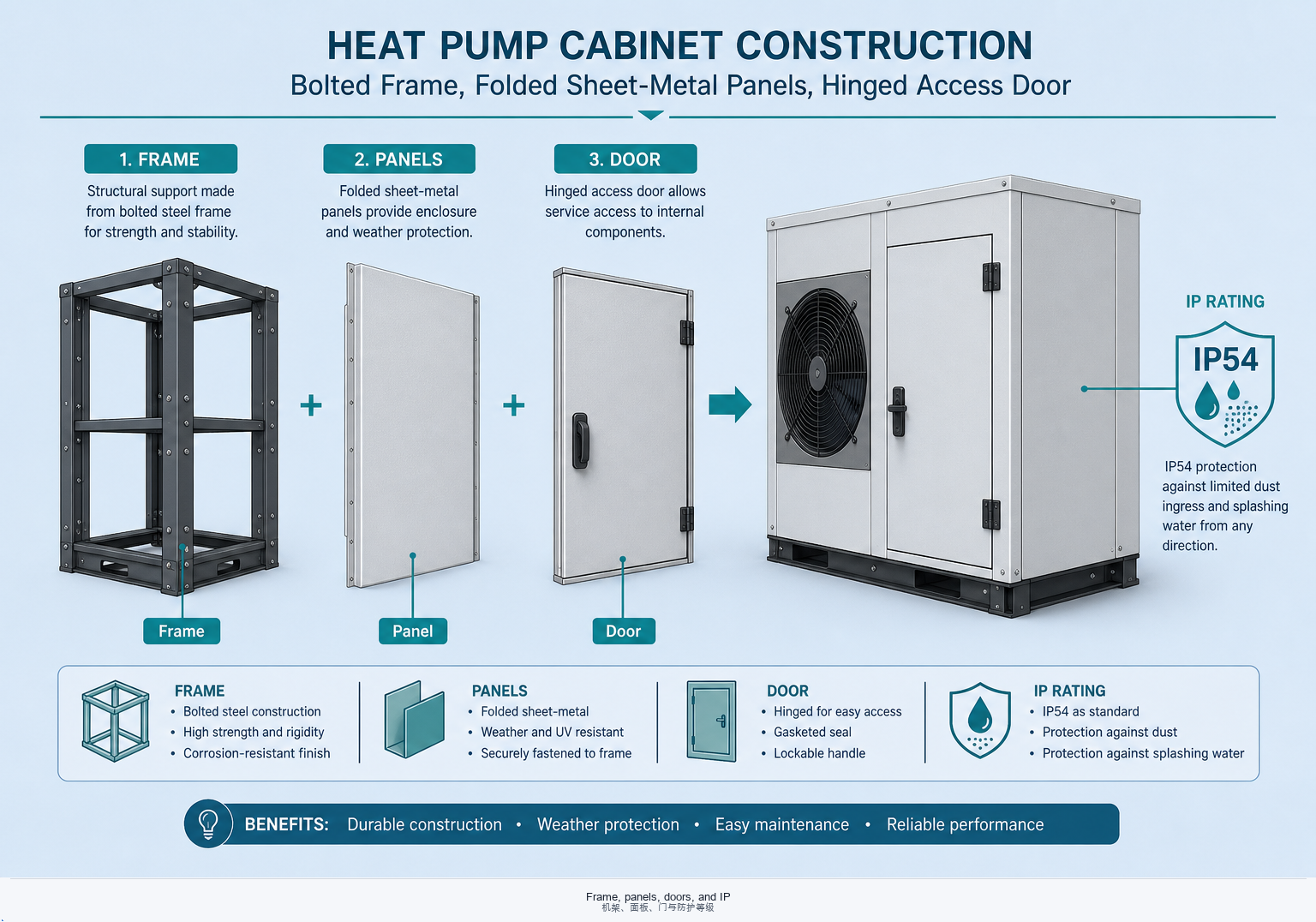
Frame & base
Base rails set fork-lift and foundation interfaces. Squareness and hole patterns decide whether compressors and exchangers align without forced piping—see 管路 stress.
Sheet metal & panels
板厚、加強筋與螺釘間距控制鼓包與聲學輻射。可拆面板需防丟緊固件,並標明哪塊蓋板後有帶電部件。
Doors & hinges
開門軌跡須避開現場牆體並允許滿櫃觸及。聯鎖與接地跨接線隨門走——勿只靠鉸鏈當搭接路徑。
IP & weather intuition
想水柱、粉塵與冷凝水——不只是「室外 = IPX4」。百葉、滴水邊與排水孔與密封條硬度同樣重要。可燃工質區域另有外殼規則——跟廠家與規範。
3 · 強電弱電分隔、屏蔽與 EMC
Cabinets fail electromagnetically when VFD cables and sensor leads share a tray. Segregation and bonding are part of the electrical story—see the electrical & controls guide.
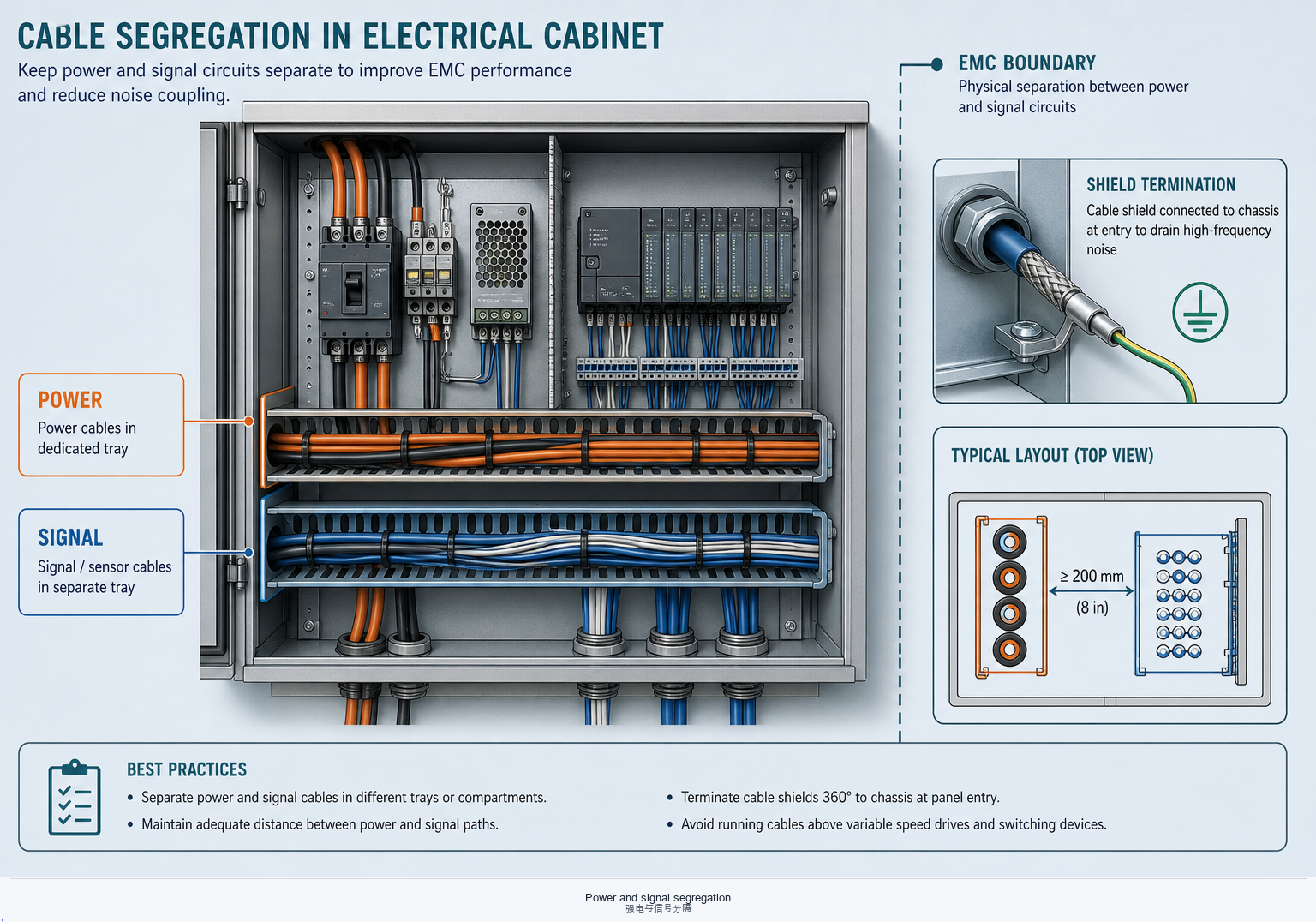
強電與弱電
電機與市電導體遠離變送器與通信線。共管僅在有文檔屏障或間距時可行——習慣不是標準。
Shielding & bonding
變頻屏蔽電纜與傳感器屏蔽需明確搭接策略(360° 接頭、PE 排或兩者)。隨意「就近接地」會形成環路,把噪聲注入控制器。
EMC filters & layout
Filters and reactors only work when cable lengths and earthing match the drive manual. Stuffing a filter in a corner with long unscreened tails defeats the purpose—detail under VFDs.
一句話記憶
EMC is a layout discipline—not a sticker on the drive nameplate.
4 · 線槽、紮帶與彎曲半徑
機械佈線實踐決定絕緣與屏蔽能否扛過運輸與十年振動。
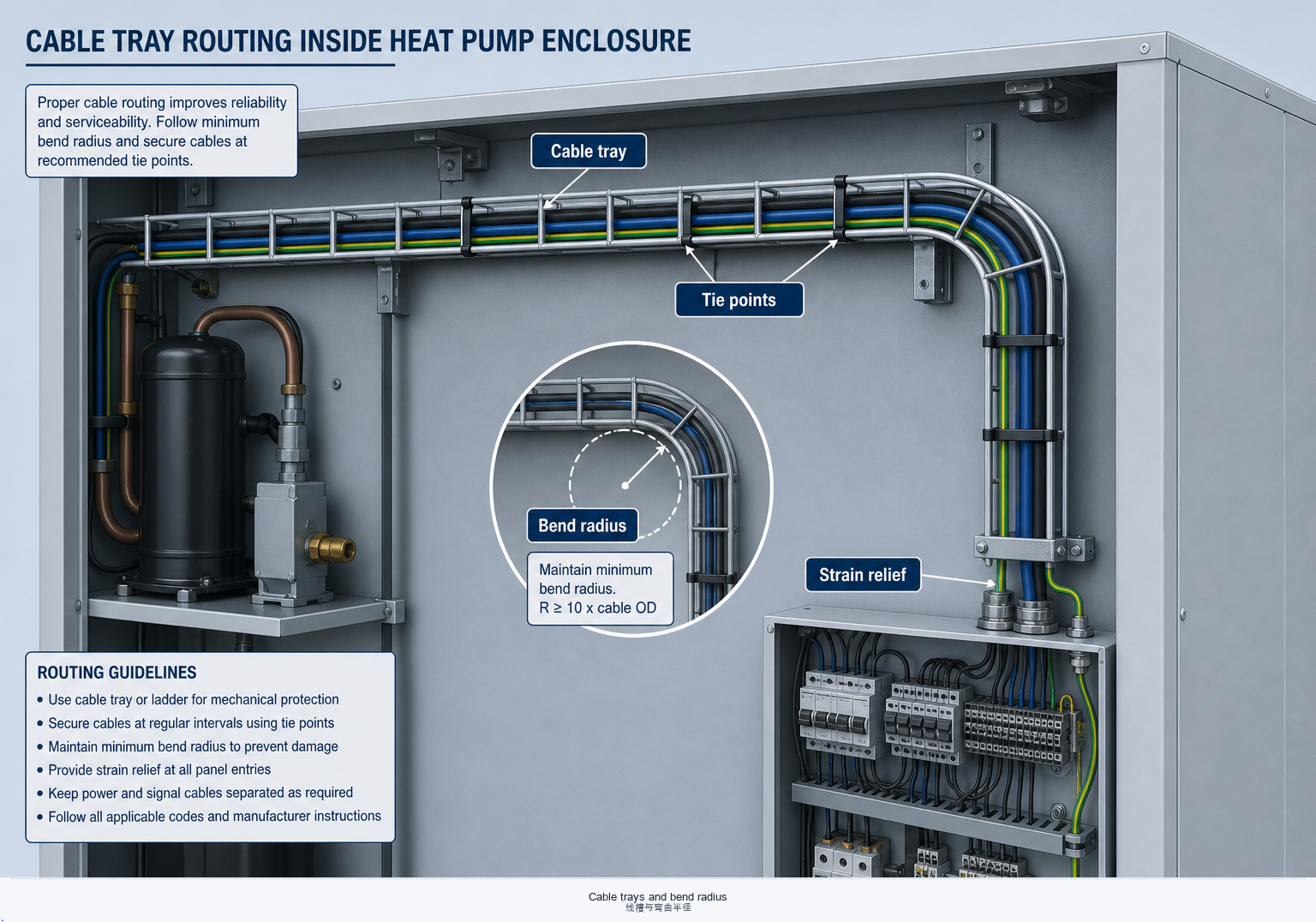
圖中的英文標註
- Bend radius
- 彎曲半徑
Trays & ducts
按填充與發熱選型;動力與信號分層。銳邊線槽需護套——振動會鋸穿護套。
Ties & strain relief
在連接器與接頭前支撐電纜。勿把屏蔽層勒扁。室外用耐紫外紮帶。
彎曲半徑
遵守動力、同軸與光纖的廠家最小半徑。櫃入口強彎是運輸後間歇傳感器故障的主因之一。
5 · Selection & build checklist
把機櫃當作產品接口:結構、安全、EMC 與可維護寫在同一張表上。
- Loads & mounts: shipping, operating vibration, foundation or roof curb interfaces defined.
- Access: coils, compressors, valves, and electrics reachable without cutting pipes—labels on live covers.
- Bonding: doors, panels, and DIN rail PE continuous; paint broken only where bonds land.
- Segregation & EMC: power vs signal trays; VFD cable and filters per electrical guide.
- IP & weather: glands, gaskets, drains match claimed rating; no field holes without sealing.
- Cable practice: tray fill, tie spacing, bend radii, and service loops documented for assembly and service.
Need drive, controller, and panel device detail? Continue at 電氣與控制.
6 · 常見問題
「爲什麼只在開門時控制器跳閘?」
常是缺少門跨接,或屏蔽依賴閉合面板作迴流。搭接與 PE 連續性應寫入設計——不是現場補丁。
「動力與 0–10 V 信號能共穿一根軟管嗎?」
Usually a bad idea next to VFD output. Segregate or use screened pairs with correct termination—see electrical & controls.
「IP 等級是不是越高越好?」
過高 IP 在通風與排水不當會困熱與冷凝水。匹配環境與熱設計——不是彩頁最大數字。
「本站下一步看哪裏?」
Electrical · Piping · Shop & test · 知識庫總覽.
機櫃 IP 試驗、電氣規範與廠家櫃圖因產品與市場而異。本頁爲工程導讀——不能替代型式試驗報告、接線圖或現場電氣設計。