熱泵基礎 · 管路系統
管路系統知識導讀
Piping is not “tube that connects components”—it is a flow, oil-return, and vibration path that decides whether the pack stays inside its map. Undersize a suction riser and you starve oil; oversize a liquid line and you lose velocity for return. Pair with lubricants, compressor oil return, vessels, and 機櫃; this page focuses on refrigerant piping geometry and protection.
1 · 在熱泵系統中的角色
每一米管子都在消耗壓差、攜帶油霧並傳遞振動。把配管當作熱力學與可靠性故事的一部分——不是事後走管。
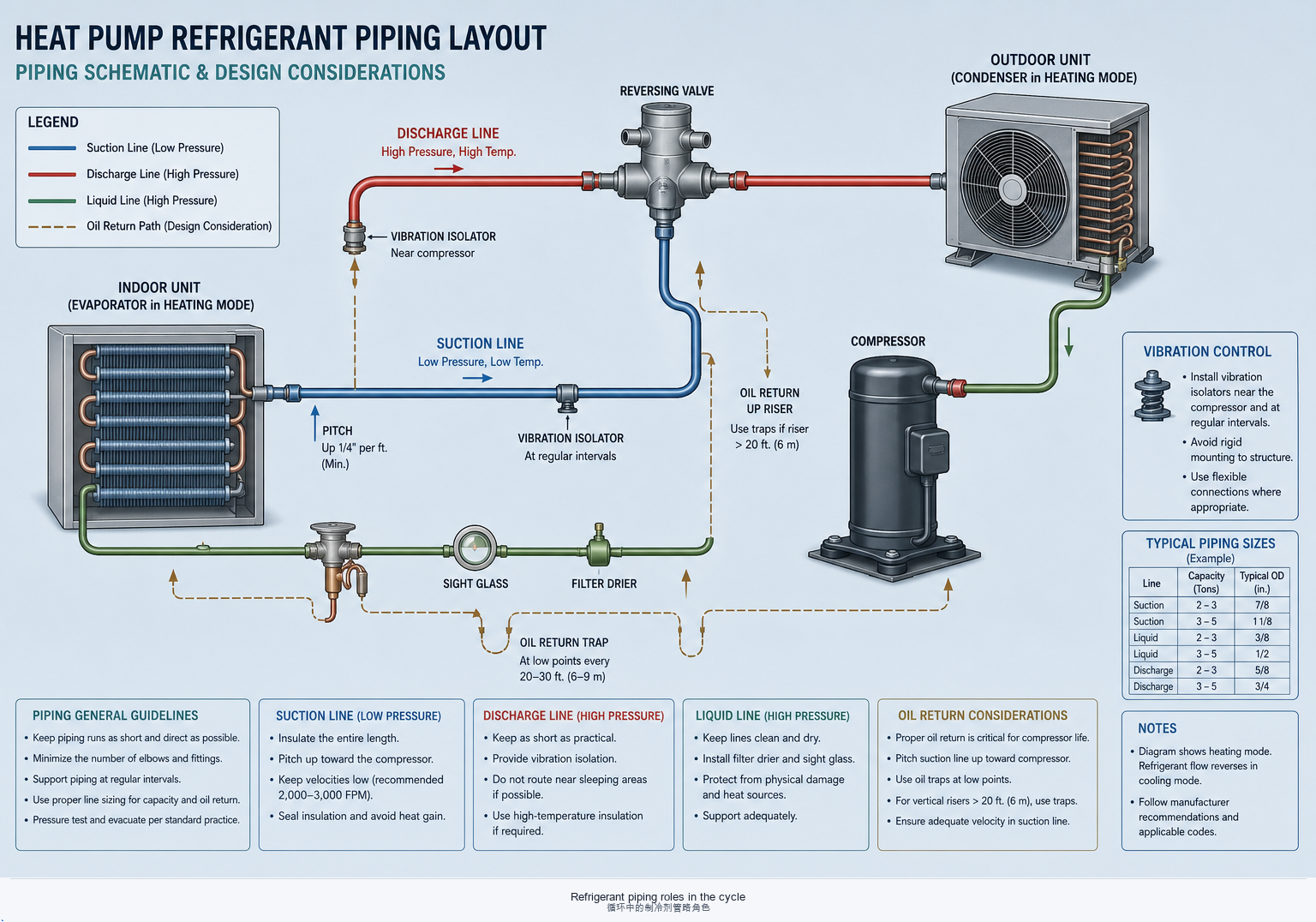
圖中的英文標註
- Suction
- 吸氣
- Liquid
- 液體
- Discharge
- 排氣
壓降
吸氣壓降降低能力、抬高壓縮機功耗;排氣壓降抬高高壓與排氣溫度。液管壓降則可能在膨脹裝置前閃氣。把 ΔP 寫進選型表,而不是等軸測圖定稿後再補。
回油
Oil travels as mist and film. Velocity, risers, traps, and separators decide whether it comes home—especially at inverter minimum speed. See lubricants and compressor oil chapter; vessels reclaim what piping cannot.
Vibration & stress
壓縮機排氣是機械激勵源。無隔振或無膨脹彎的剛性短接管會撕裂管件、疲勞釺焊接頭。「看起來整齊」的配管仍可能是疲勞機器。
2 · 管徑、坡度、立管與支架間距
目錄管徑只是起點。攜油流速、排水坡度與立管設計決定部分負荷能否存活。
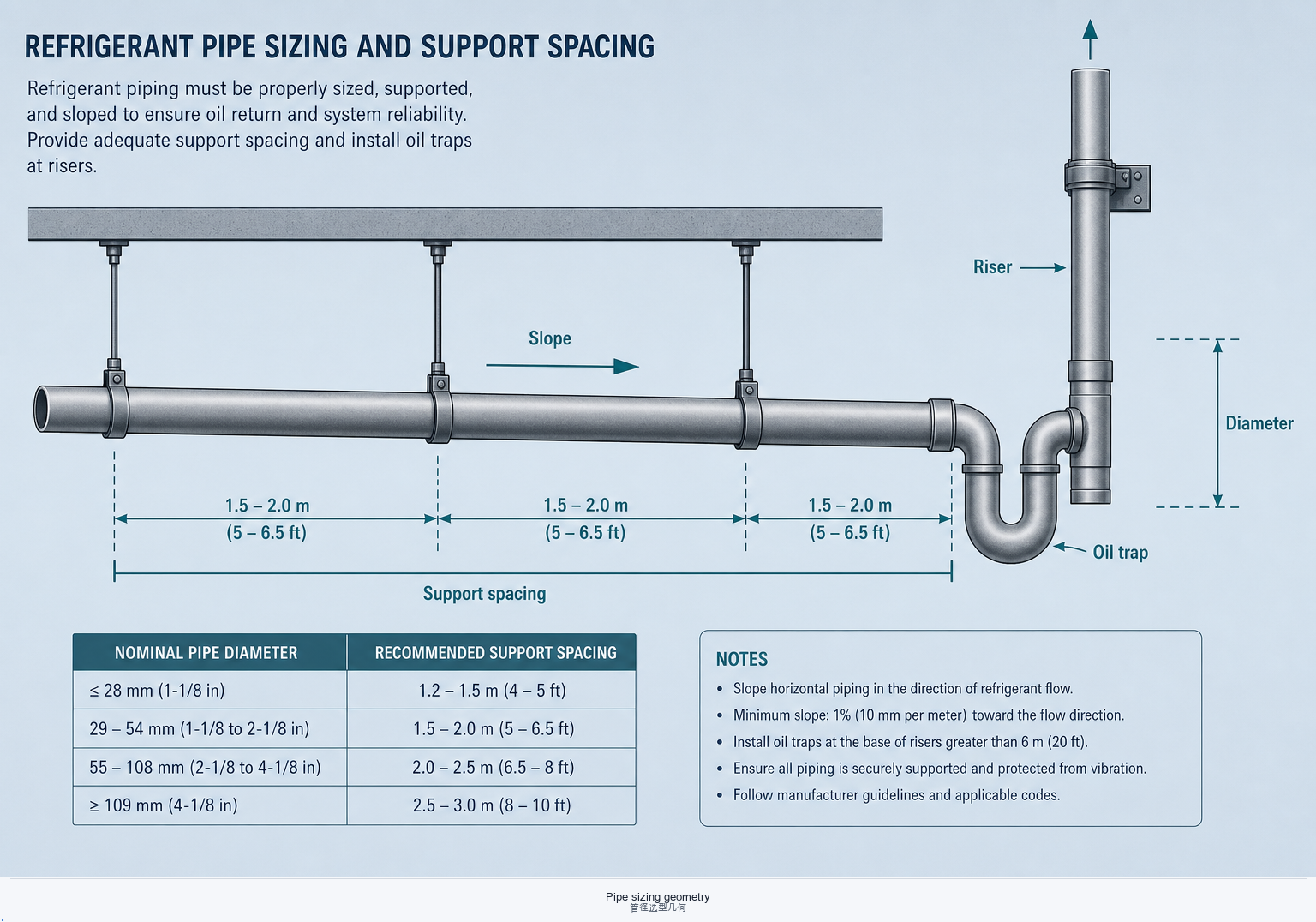
圖中的英文標註
- Support spacing
- 支架間距
Diameter & velocity
Size suction for acceptable ΔP and oil-carrying velocity at minimum continuous mass flow. Discharge and liquid lines need their own velocity windows—do not copy suction diameter by habit.
Slope & drainage
水平吸、排氣管通常坡向壓縮機或排水/存油點,避免油與冷凝水積在死管段。坡度反了會形成安靜的油阱。
Risers & traps
Vertical lifts need traps and, at wide turndown, double risers or equivalent OEM schemes so oil is lifted without flooding the compressor on start. Pair with oil separators when carry-over is high.
支架間距
跨距過大則下垂、改變坡度並放大振動。間距取決於管徑、保溫質量與充液重量——廠家表是起點,彎頭與閥組處再校覈。
3 · 支架類型、隔振與熱膨脹
夾具固定幾何,隔振切斷振動路徑,膨脹彎吸收伸長。缺一不可,否則幾個季節後整齊機架會變成泄漏工廠。
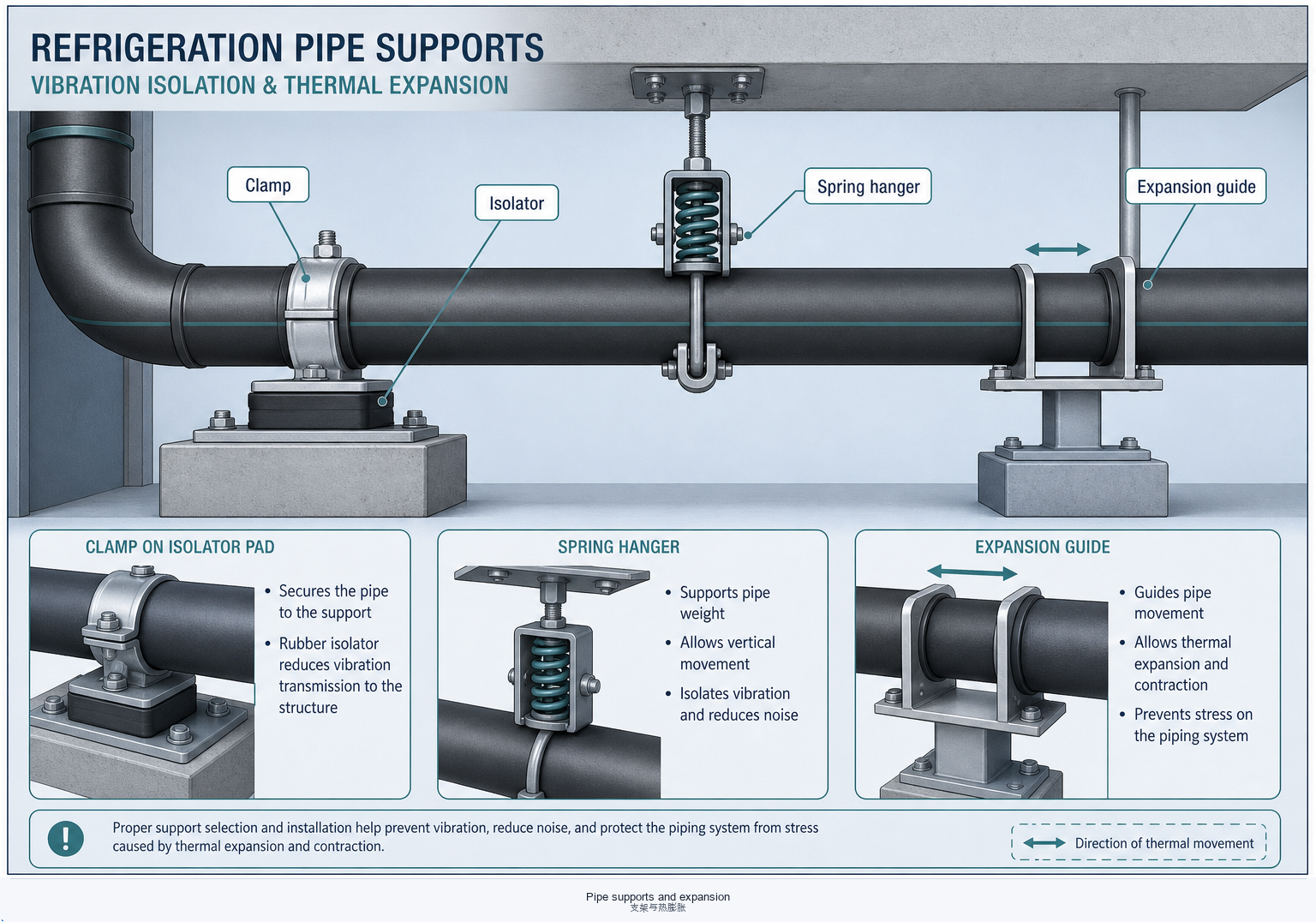
支架類型
吊架、鞍座管卡與槽鋼支架各適不同載荷。保溫管需不壓壞隔汽層的托架;熱排氣管需耐溫材料。
隔振
軟接頭、彈簧吊架與橡膠座切斷結構傳聲。隔振靠近振源;下游剛性管段勿再耦合進櫃體或建築鋼結構。
熱膨脹
銅與鋼隨溫度伸長。長熱氣管需膨脹彎、偏置或補償器,以免錨點撕裂接頭。冷吸氣管會收縮——同一佈置須兼顧兩極端。
4 · 防腐與保溫
金屬與保溫成對失效:保溫下腐蝕(CUI)、潮溼隔汽層與露點結露,破壞可靠性不亞於管徑錯誤。
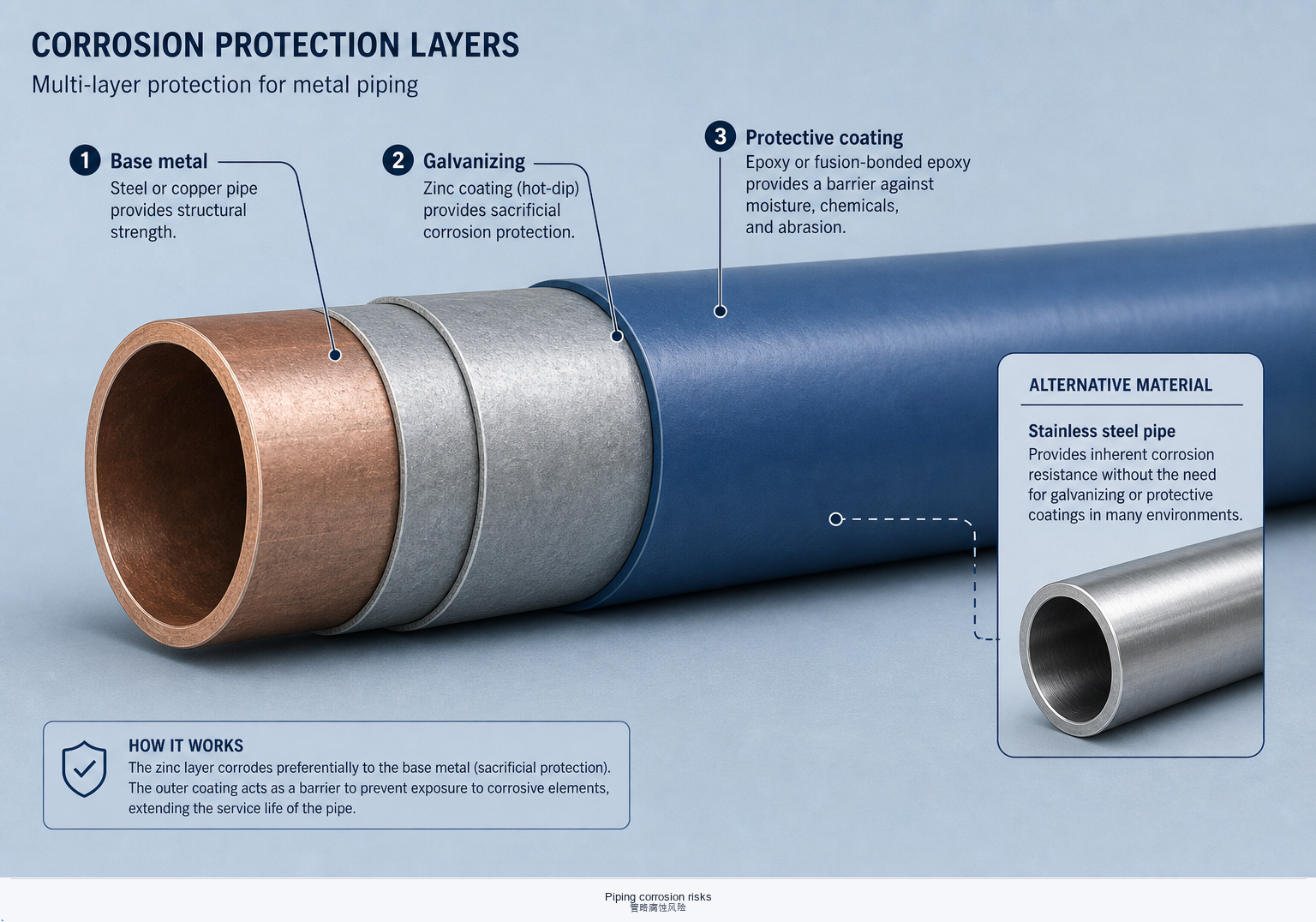
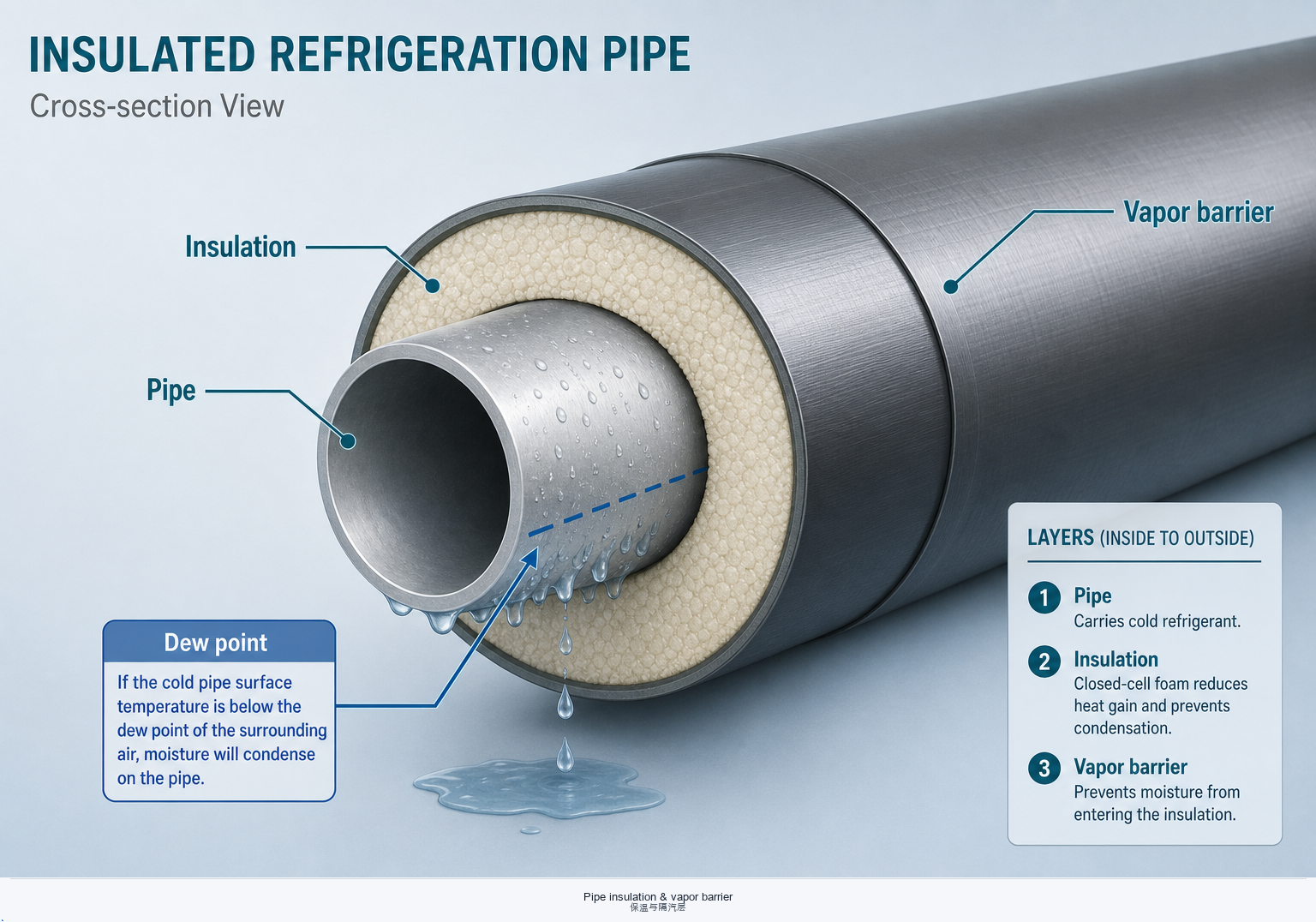
圖中的英文標註
- Dew point
- 露點
腐蝕 & materials
管材與管件合金匹配工質、油品與環境(沿海、工業、機房冷凝水)。碳鋼要防護;銅–鋼電偶要隔離;接頭勿長期浸水。
保溫材料
閉孔彈性體、PIR/PUR 與岩棉各有溫度與防火定位。熱排氣與冷吸氣很少能不經校覈共用一種產品。
Vapor barrier & dew point
吸氣與冷液管上,連續隔汽層阻止溼空氣到達冷金屬。接縫、閥體與吊架穿透是常見失效點——膠帶與膠泥是設計的一部分,不是裝飾。
一句話記憶
Wet insulation is a corrosion machine—fix dew point and barrier integrity before arguing about an extra millimetre of foam.
5 · Selection & layout checklist
先鎖定工質、能力與壓縮機工況圖;配管是在整個調速範圍內讓回油與 ΔP 誠實的網絡。
- Mass-flow window locked (design + inverter minimum)—size suction for oil return at the low end.
- ΔP budget for suction, discharge, and liquid—flash risk ahead of the expansion device checked.
- Risers, traps, slope per OEM application note; separators where carry-over demands—see vessels.
- Supports & isolation: spacing, vibration breaks, expansion loops; no rub points into the 機櫃.
- Corrosion & insulation: materials, coatings, vapor barrier continuity, dew-point thickness.
- 可維護性: valves, driers, and joints accessible; oil story aligned with lubricants and compressor oil.
Need oil chemistry or separator geometry next? Continue at 潤滑油 or Oil separators.
6 · 常見問題
「吸氣管加大就能減小壓降嗎?」
Only if oil-carrying velocity still holds at minimum continuous mass flow. Oversized suction is a classic oil-starvation path on inverter packs—see compressor oil chapter.
「爲什麼排氣管在壓縮機附近裂開?」
多爲剛性固定疊加振動與熱伸長。加隔振、軟段或膨脹彎並正確支撐——不要只「補釺焊加固」。
「吸氣保溫是不是越厚越好?」
Thickness must beat dew point and keep the vapor barrier intact. Thick foam with open seams still sweats and corrodes.
「本站下一步看哪裏?」
潤滑油 · Compressor oil · 容器 · 機櫃.
配管規範、廠家應用手冊與保溫標準因產品、工質與轄區而異。本頁爲工程導讀——不能替代簽字軸測圖、應力分析或型式試驗佈置規則。