熱泵基礎 · 壓縮機
壓縮機知識導讀
The compressor is the heart of the vapor-compression machine—it sets pressure ratio, mass flow, and much of the reliability risk. This illustrated guide covers types, construction, how to read performance maps, oil management, and heat-pump / high-lift specifics. For the Chinese trade label 匹 and quote traps, see the fundamentals chapter; for OEM selection tools, use 工具與標準.
1 · 在蒸汽壓縮循環中的角色
A boiler makes heat. A heat pump moves heat—and the compressor is what creates the pressure difference that makes that move possible. For the full cycle family map (Carnot → VCC upgrades → transcritical / absorption / steam), see the cycle guide.
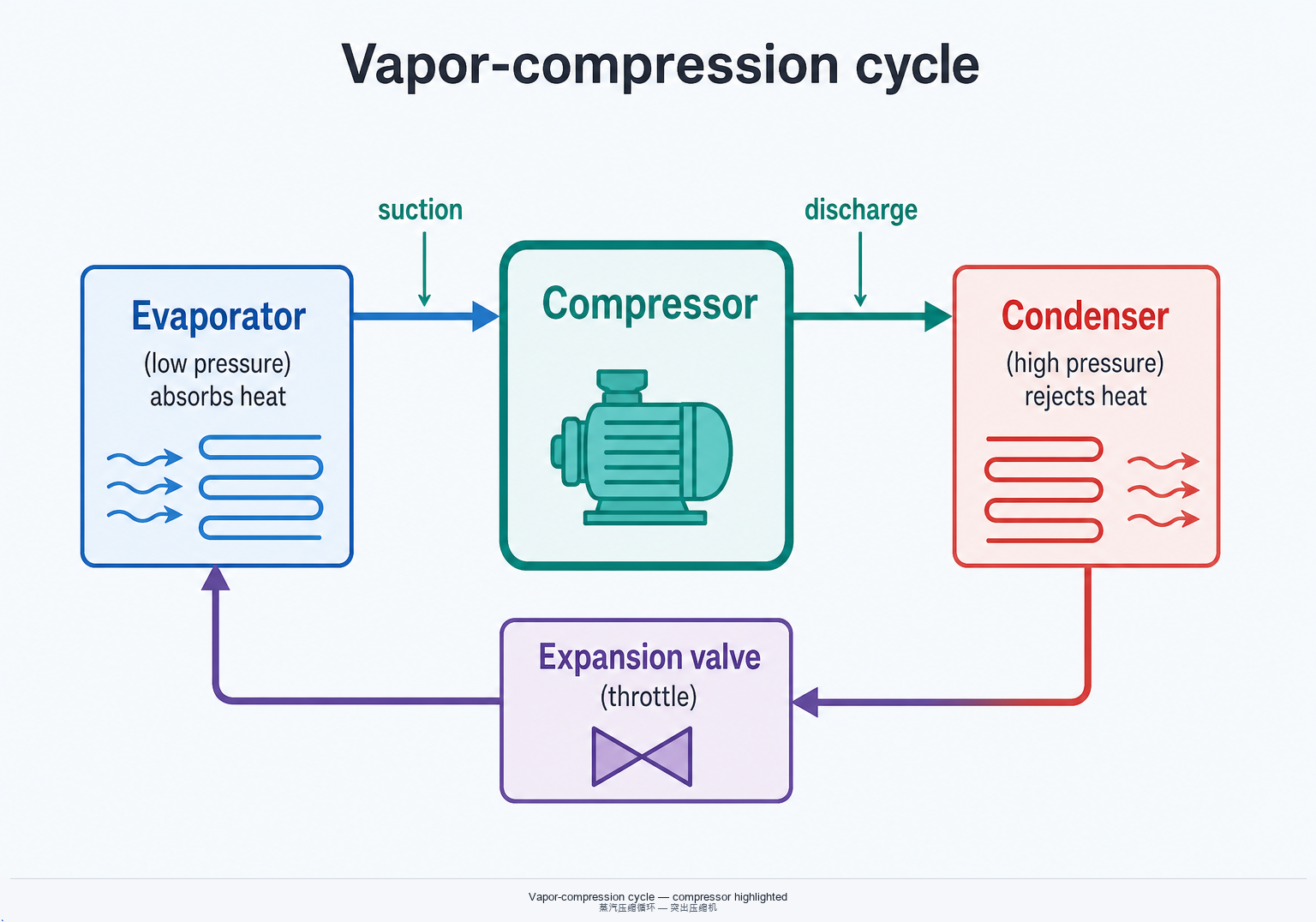
圖中的英文標註
- Evaporator
- 蒸發器
- Compressor
- 壓縮機
- Condenser
- 冷凝器
- Expansion valve
- 膨脹閥
升壓 + 質量流量
Suction gas from the evaporator is compressed to discharge pressure. Capacity scales with displacement × suction density × volumetric efficiency. Change evaporation or condensation temperature and both kW and power move—there is no “size” detached from duty.
熱泵 vs 純製冷
Cooling duty values the evaporator; heating duty values the condenser (and often a higher sink temperature). The same frame can look “big” on a comfort cooling map and undersized on a high-lift heating map. Always state source and sink temperatures.
可靠性風險集中處
液擊、缺油、排氣溫度過高、回油設計錯誤,症狀多半先出現在壓縮機——即便根因在蒸發器或管路。
2 · 機型家族
沒有一種機型能通喫所有容量、升程與工質。先用家族做初篩,再以廠家性能圖確認。
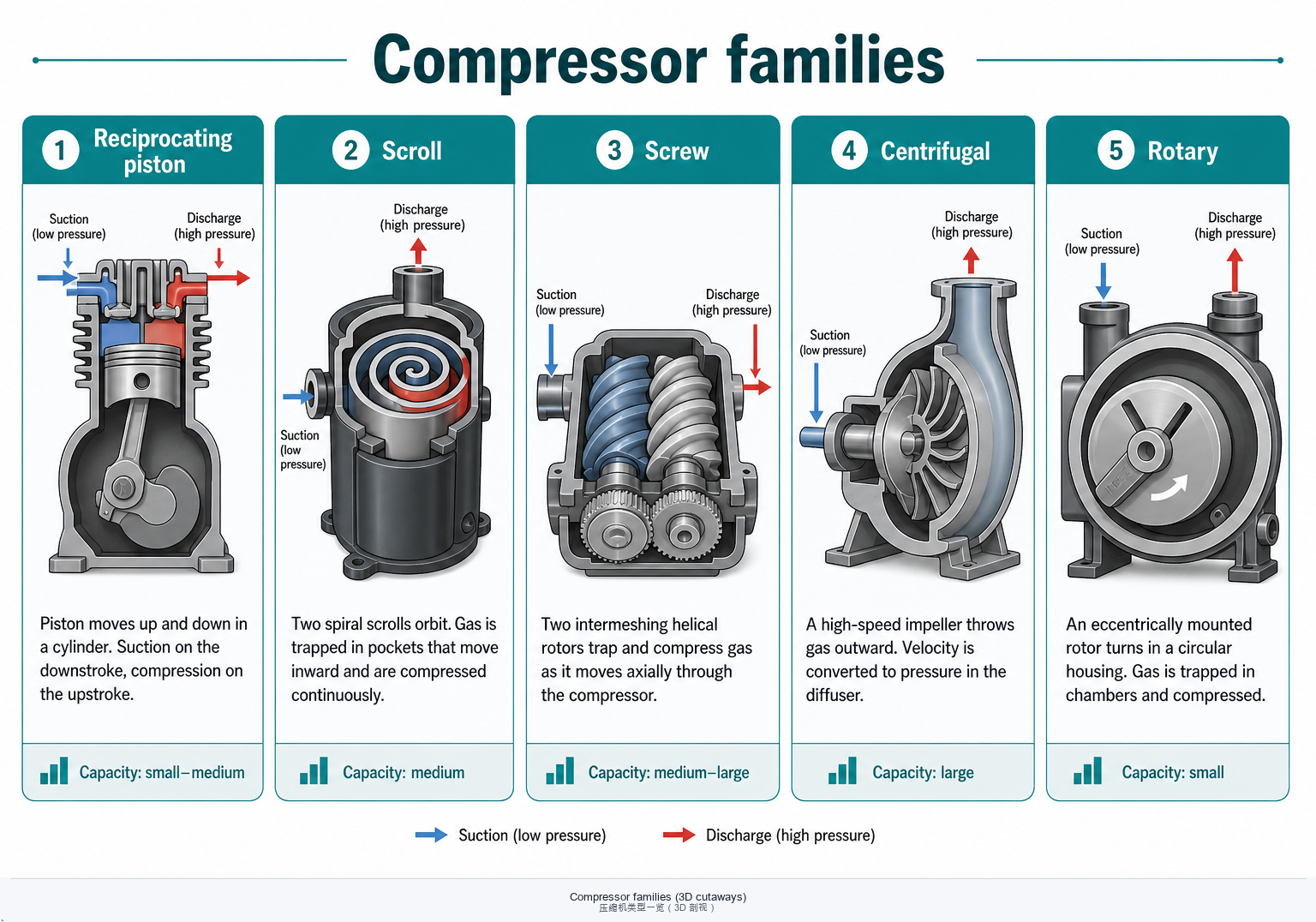
圖中的英文標註
- Scroll
- 渦旋式
- Screw
- 螺桿式
- Centrifugal
- 離心式
| 家族 | 典型容量段 | 升程 / 壓比 | 油路要點 | 變載方式 | 熱泵選型直覺 |
|---|---|---|---|---|---|
| 活塞式 | Small–medium (kW to low hundreds) | 較寬;深冷可多級 | 曲軸箱潤滑;排氣帶油 | 卸載、切缸、變頻 | 商用機組常見;中等壓比穩健 |
| 渦旋式 | 小–中(家用至輕商) | 舒適熱泵表現好;高升程需核圖 | HFC/HFO 多用 POE;回油關鍵 | 變頻 / 數碼渦旋 | 空氣源舒適熱泵主力;補氣機型服務寒冷氣候 |
| 螺桿式 | 中–大 | Strong for industrial HP & chillers | 噴油/油分迴路是核心 | 滑閥、內容積比、變頻 | 多數 HTHP 與工業項目的主力機型 |
| 離心式 | 大(可達 MW 級) | 靠近設計葉尖速度最佳;注意喘振 | 已有無油磁懸浮路線 | 導葉、變頻等 | 大型冷水;部分 HTHP/蒸汽熱泵概念 |
| 轉子式(滾動活塞) | 小 | Comfort & specialty packs | 油池緊湊;安裝姿態敏感 | 變頻常見 | 房間空調/小型熱泵;工業核心較少 |
容量段僅爲工程口語。最終選型必須對齊工質、蒸發/冷凝(或空氣/水)溫度與廠家運行包絡。
3 · 全封、半封與開啓式
電機與殼體如何封裝,決定可維修性、泄漏路徑,以及現場能否接受該機型。
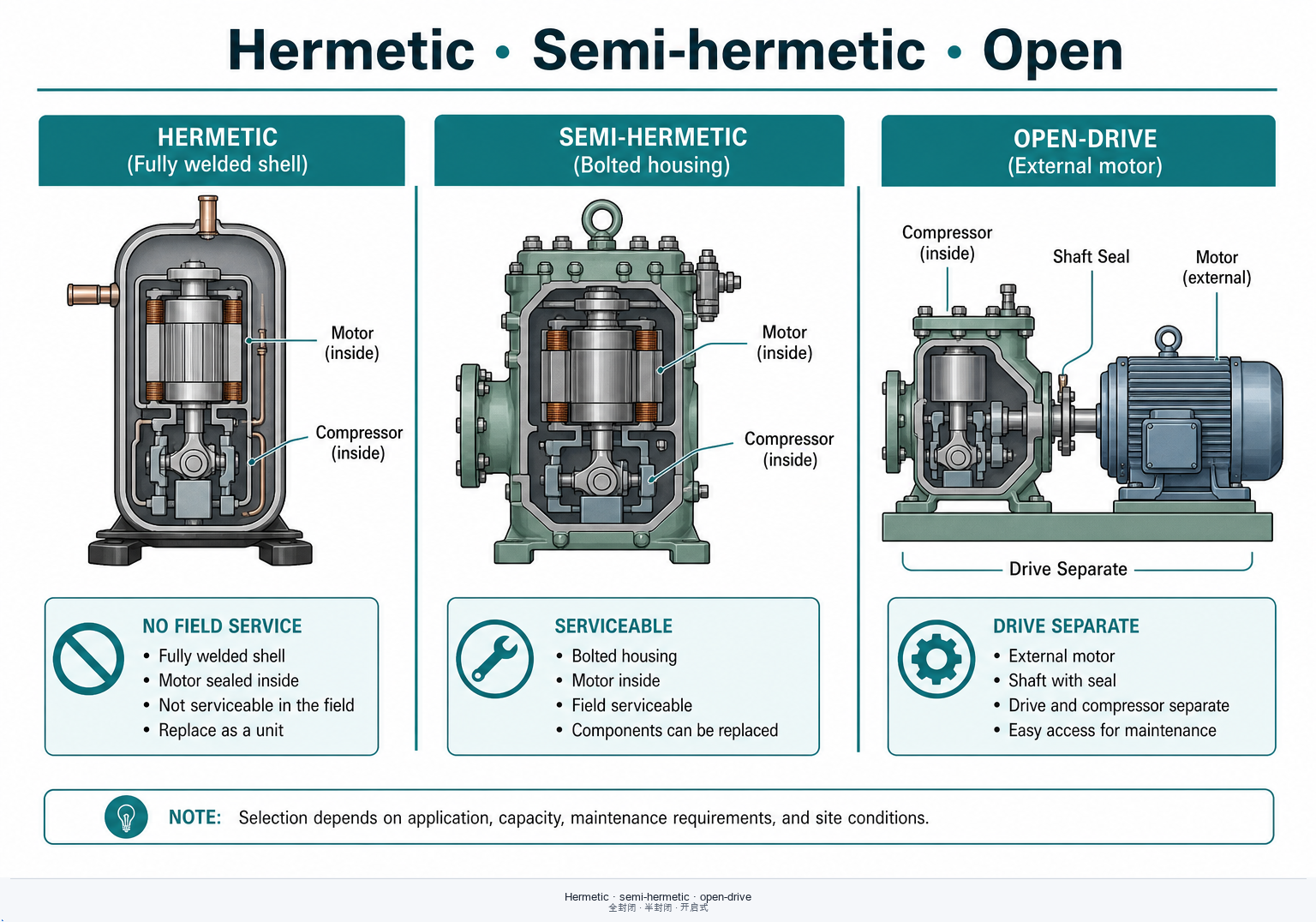
全封
電機與泵體焊在殼體中。適合渦旋/轉子等大批量產品,泄漏少、體積小。現場幾乎不可大修——故障多爲更換。電機靠吸氣或專用冷卻路徑冷卻。
半封
螺栓機殼,電機仍在製冷劑側冷卻。商用/工業活塞與螺桿常見,因軸承、閥片、轉子可檢修。仍是壓力容器——力矩與密封面工藝重要。
開啓式
External motor (electric or engine) with a shaft seal. Flexible drives and motor swaps; seal leakage and alignment become O&M items. Common historically on large ammonia plants; less common on small fluorocarbon packs.
Safety & A2L / natural fluids
可燃或有毒工質帶來充註上限、通風與電氣分區——不只是「選個機架」。凍結 BOM 前確認廠家對該工質(如 R290、R717、R744)的合格聲明與現場規範。
4 · 性能圖與關鍵參數
樣本上的「匹」或單個 kW 不是性能圖。製冷/制熱量與功率是蒸發溫度、冷凝溫度(以及過熱、過冷、轉速)上的曲面。
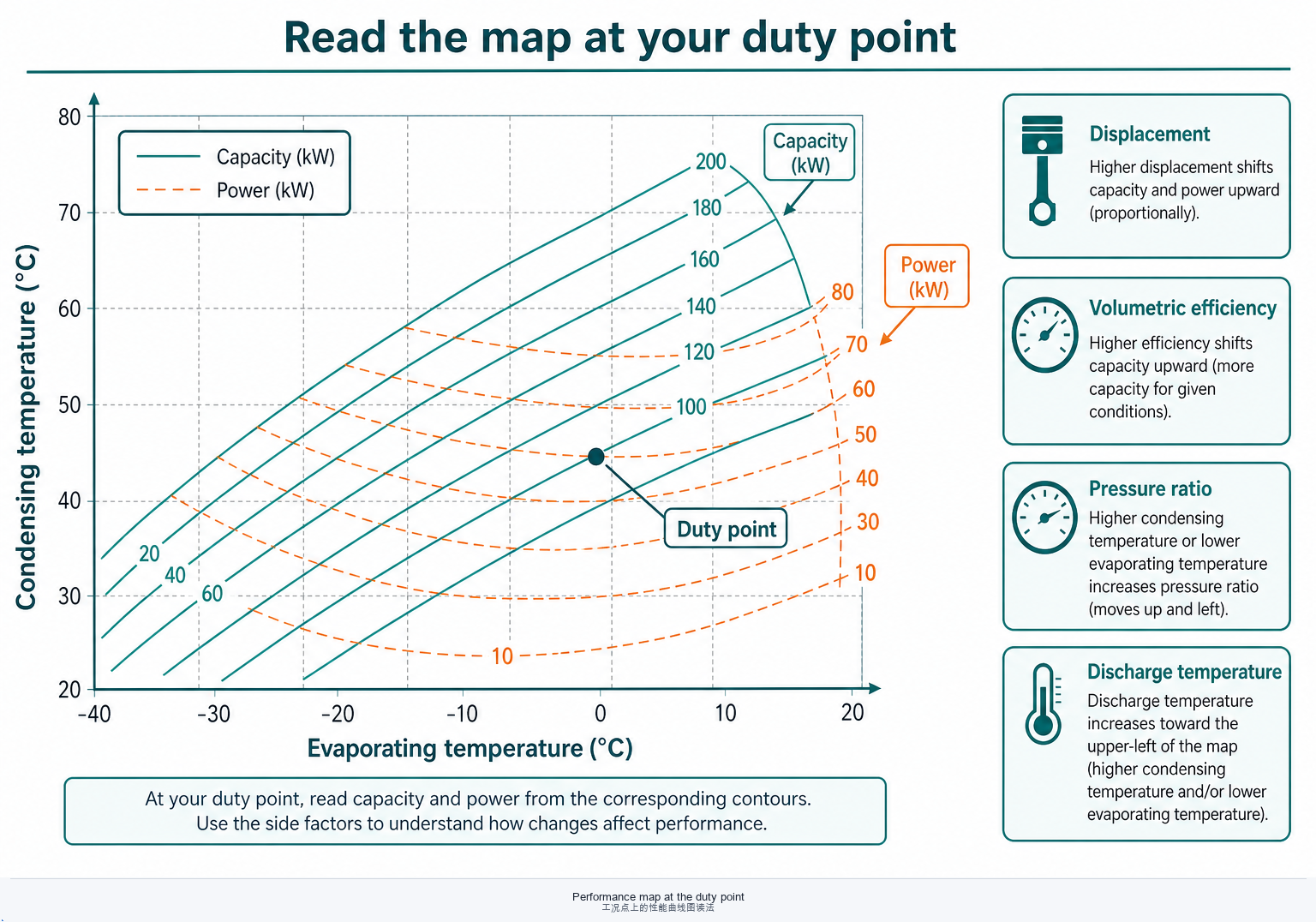
圖中的英文標註
- Volumetric efficiency
- 容積效率
- Pressure ratio
- 壓比
- Discharge temperature
- 排氣溫度
Displacement & volumetric efficiency
幾何排量定尺度;壓比升高、閥口損失增大時容積效率下降。相同「cc」在同一吸氣條件下也可能給出不同質量流量。
壓比 & discharge temperature
大溫升推高排氣溫度與油應力。噴液/噴氣、經濟器或分級壓縮存在的原因,就是單級會碰到熱力或機械極限。
吸氣法蘭過熱度
過小有液擊風險;過大降低質量流量並抬高排氣溫度。性能圖點對應假定過熱度——控制策略須與廠家假設對齊。
一句話記憶
Same frame, different Te/Tc → different kW. If the quote omits source/sink temperatures, you are not yet comparing machines.
5 · 潤滑、回油與可靠性
Oil must lubricate bearings and rotors, then come home. Most “compressor failures” that survive root-cause analysis are system oil or liquid-management problems. For oil chemistry and family selection, see the lubricant guide.
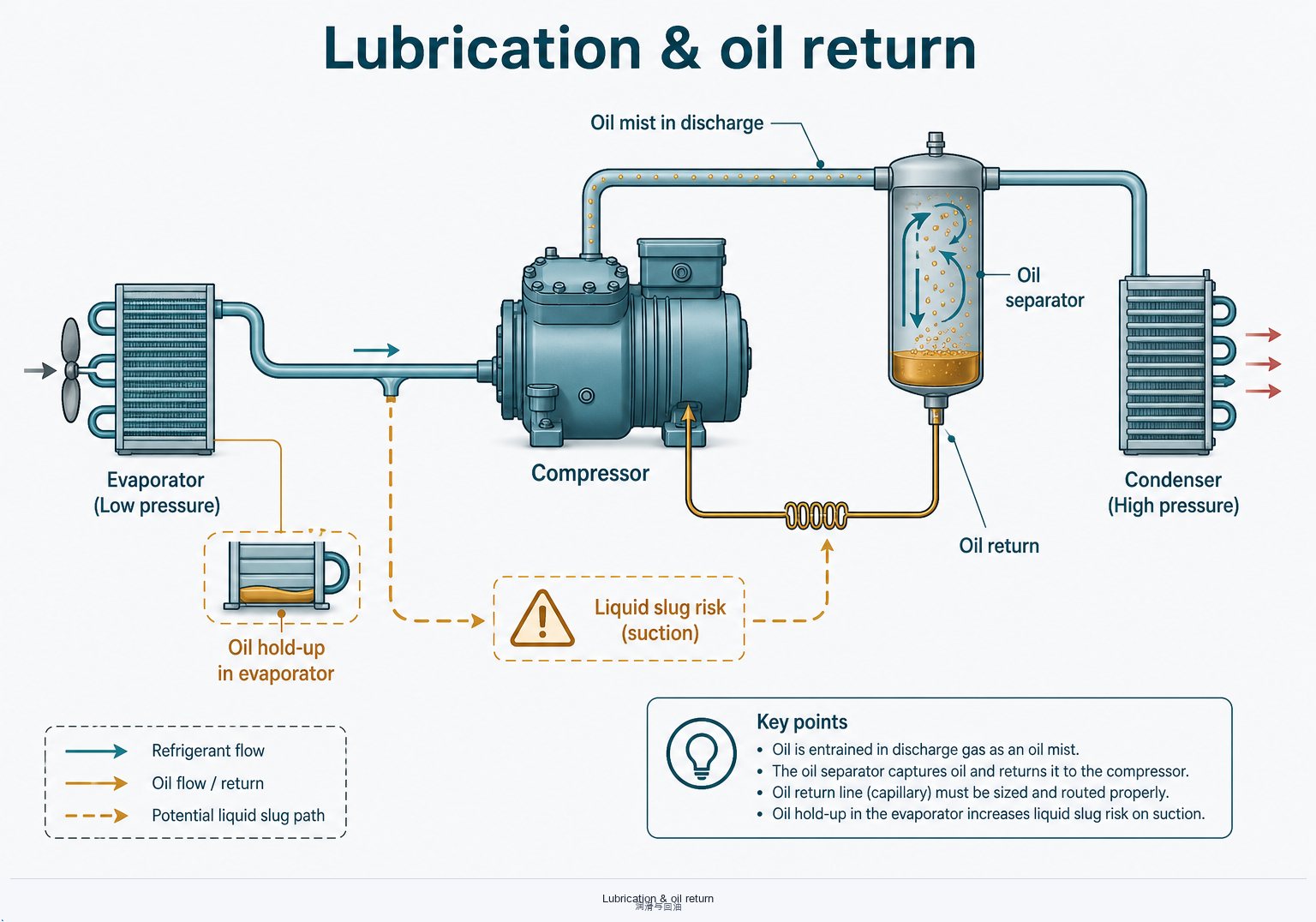
圖中的英文標註
- Compressor
- 壓縮機
- Oil separator
- 油分
- Oil return
- 回油
油走出去,還要回來
排氣油霧進入系統。油分回收大部分;其餘須從蒸發器與集管返回。低流量、長立管或錯誤存油彎會困油——軸承缺油,換熱器同時結垢。
液擊
Liquid at the suction flange is mechanical shock. Causes include overcharge, failed expansion control, flooded evaporators, or migration after long off-cycles. A field case of multi-machine seizure traced to evaporator design is documented in Screw seizure & liquid-slug tolerance.
高溫工況下的油應力
HTHP duty can carbonize oil or exceed viscosity windows. That is why oil-free / maglev paths appear in R&D roadmaps—see Industrial HTHP · advanced compressors.
6 · 熱泵與大溫升特化
大溫升制熱不是「冷水機組倒着跑」。壓比、補氣策略與部分負荷小時數決定全生命週期成本。
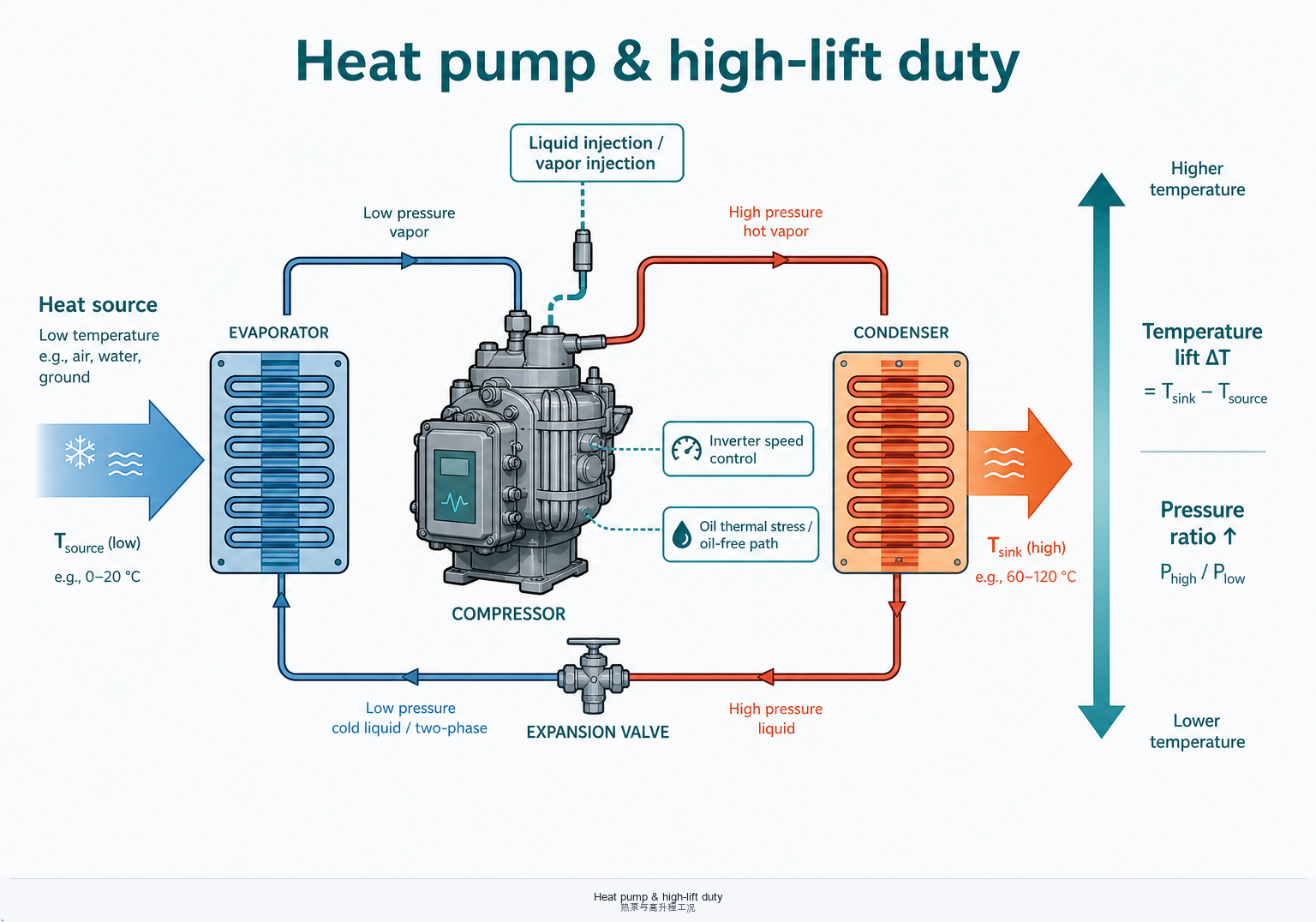
圖中的英文標註
- Heat source
- 熱源
Injection & economizer
噴液或噴氣可降低排氣溫度,並在低源溫下抬高制熱量。確認性能圖包含你的補氣模式——而不只是幹吸氣包絡。
Inverter & part load
年能耗往往取決於部分負荷 COP 與最低轉速回油,而非銘牌峯值。索要多轉速性能圖與最低連續運行點。
天然工質:CO₂、氨、碳氫
R744 means high pressure and often transcritical gas coolers; R717 means toxicity/zoning and oil miscibility choices; R290 means charge and ignition source control. Pair fluid knowledge from the refrigerant guide with compressor OEM qualification.
走向無油 / 磁懸浮
For frequent start-stop and high-duty steam service, oil management can be the bottleneck—not heat-exchanger catalogues. Context: HTHP R&D themes.
7 · 選型清單
Before comparing price or “匹”, lock the engineering boundary. Then open OEM software with the same inputs.
- 製冷劑 (and blend glide / safety class) locked with the system designer.
- Source & sink temperatures at design and at a realistic part-load / cold-climate point.
- Heating vs cooling capacity definition—and whether condenser or evaporator kW is the contract metric.
- Supply boundary: compressor only vs package; oil separator, inverter, and auxiliaries in or out of the quoted kW/COP.
- Contract language: kW @ stated conditions—not 匹 alone. See Compressor “匹” chapter.
- Cross-check OEM tools on the Tools & Standards · OEM links page (Bitzer, Dorin, Bock, etc.).
Still comparing quotes with mismatched rulers? Return to 第 3 講 · 商務與標準 in the fundamentals series.
8 · 常見問答
“Can I size by motor kW alone?”
不行。電機功率不等於制熱/製冷 kW。應在你的 Te/Tc(或空氣/水溫度)下讀容量表,並單獨確認輸入功率以做電氣設計。
「爲什麼紙面合格的螺桿現場會抱死?」
Often liquid management or oil return—not a random manufacturing defect. Trace evaporator design, traps, and off-cycle migration. Case study: screw seizure insight.
「熱泵一定上變頻更好嗎?」
部分負荷與軟啓往往更有利——但前提是配管下最低轉速回油已驗證。變頻用不好會在低流量時缺油。
「站內接下來讀什麼?」
匹 / rating traps · 潤滑油 · 製冷劑百科 · HTHP compressors · OEM selection links.
各廠運行包絡、油規格與標準版本因產品與年份而異。本頁爲面向採購與集成商的工程導讀,不能替代型式試驗報告、簽署的數據表或安全規範合規。