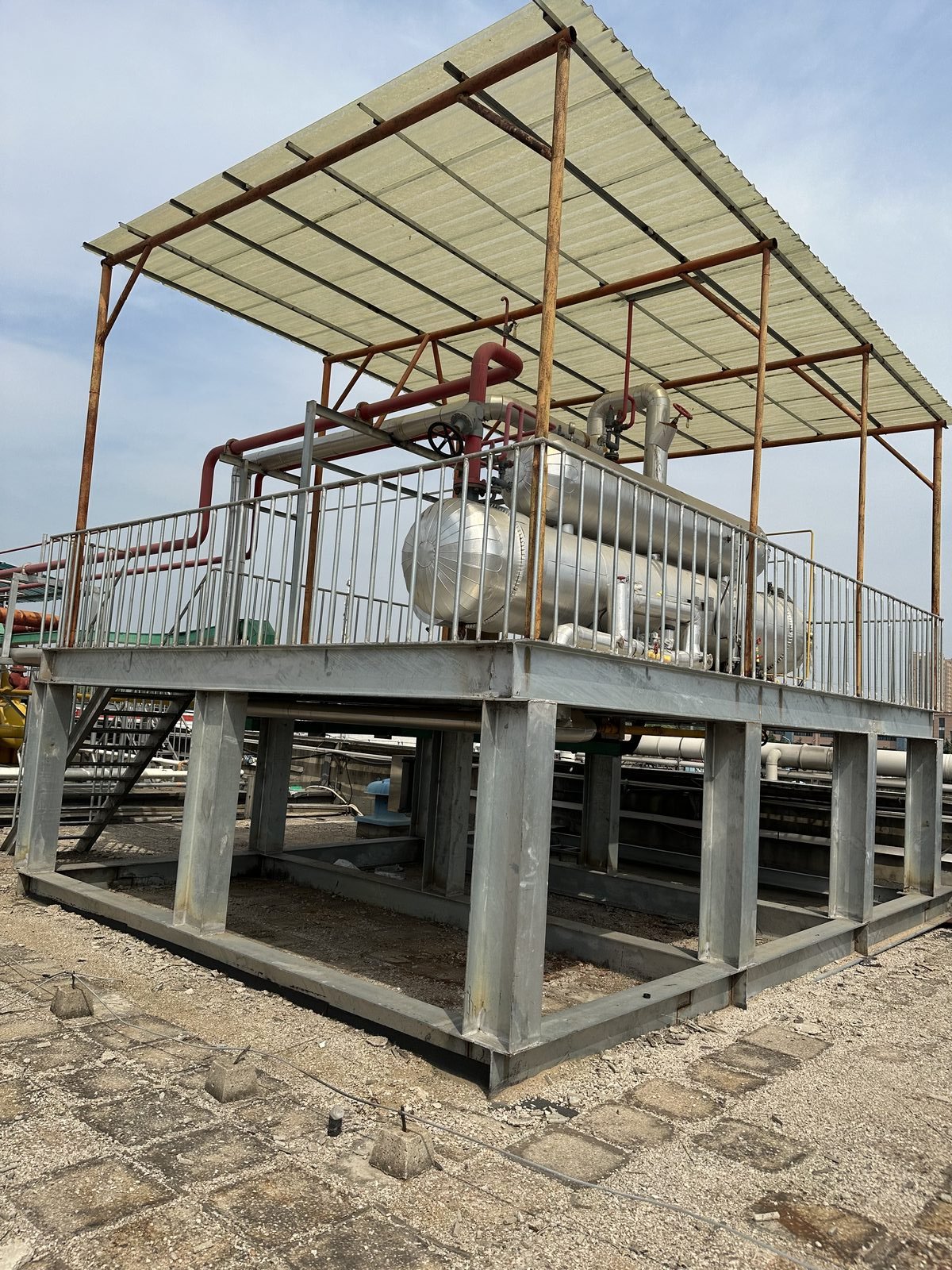
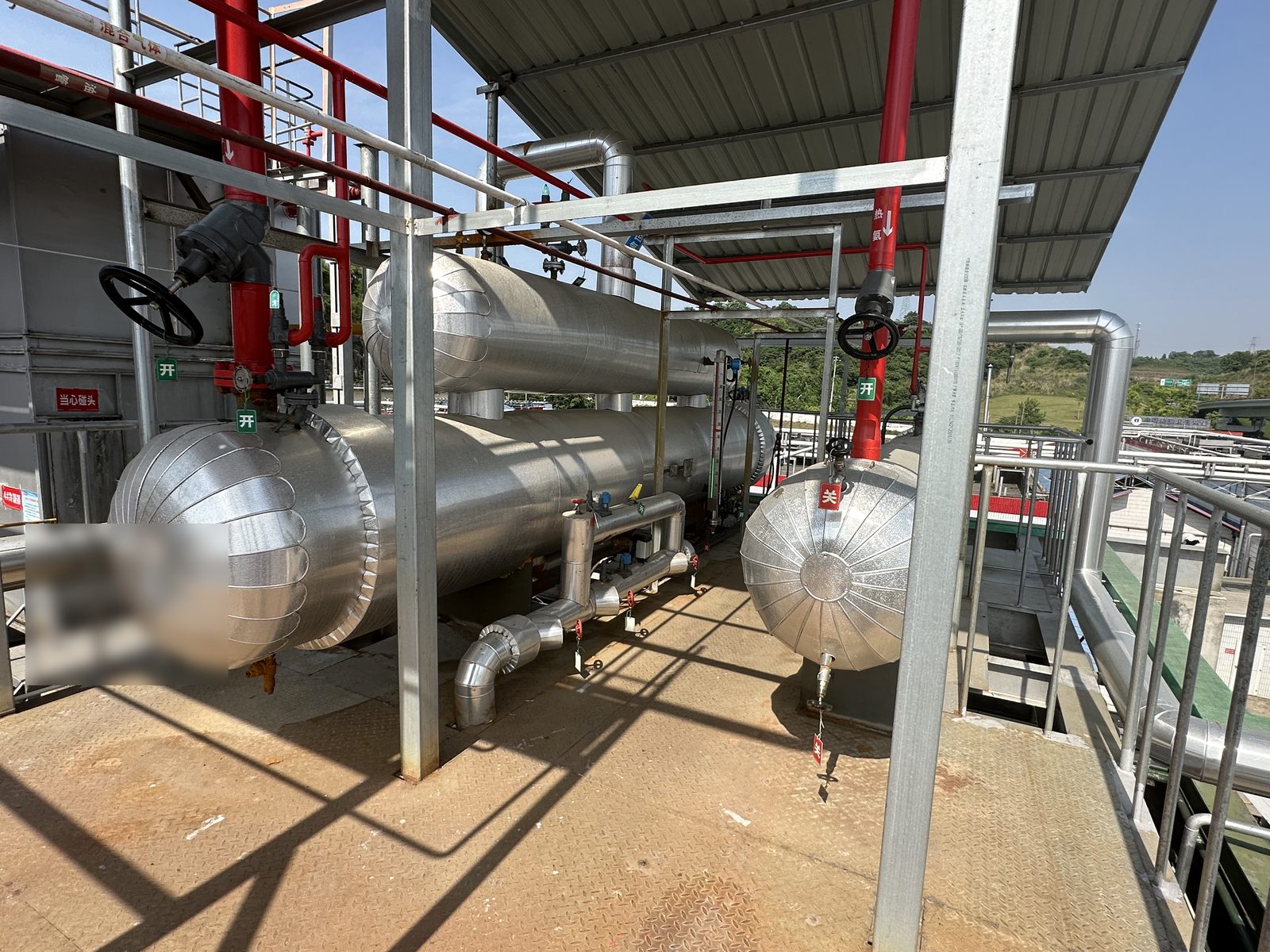
Find a similar use of heat. Compare its temperatures, evidence and open questions with your site.找一个相近的用热场景,对照温度条件、证据和待确认问题。
Field references and public sources are labeled separately. These entries are not independently metered delivery records.现场参考与公开资料分别标注;这些条目不是独立计量核实的交付记录。
Evidence before promotion
Two site visits, one practical starting point从两次现场调研开始看
See how ammonia heat pumps connect refrigeration heat to plant hot water. Site observations and reported outcomes remain distinct from independent measurements.看氨热泵如何连接制冷排热与厂区热水。现场所见和业主反馈不等于独立计量。
Two author field surveys (Central China meat plants A and B, ammonia heat pumps for hot water) stay in the photo strip. The list further down also includes public-source steam projects, separated by whether they are operating and by technology route. None of these entries is an independently metered delivery record.
Field references and public-source write-ups stay separate. Illustrative screens remain archived. Numbers in public-source cases are copied from the cited report or vendor note.
Know what kind of evidence you are viewing
Three clearly separated case types
2 cases
Anonymized field references
Author site observations with customer identity removed. Reported outcomes are not presented as independent metering.
11 guides
Public-source learning cases
Published facts and editable teaching assumptions stay separately labeled.
Filters list only industries with a published entry. Textile has almost no public cases to filter. The chemical entry is a project under construction, not an operating result.
Owner quotes COP 3–5, but the later IEA HPT card still marks COP pending validation. Commissioning operation is not long-term acceptance; carbon savings are estimates.
Public reports, papers, or vendor materials — source and assumptions labeled
Operating record and technical details运行记录与技术资料
Belgian sugar-refining installation: the November 2025 IEA HPT card records commissioning operation and subsequent compressor operation at full capacity. Annual benefits remain estimates.
Temperature lift
≈ 63 K
Architecture
Closed n-pentane heat pump with a GEA screw compressor; steam-to-steam heat recovery.
Result status
The November 2025 IEA HPT card reports part-load commissioning followed by full compressor capacity after modifications; heating COP still awaited validation.
Data source
Public reports, papers, or vendor materials — source and assumptions labeled
Design COP is about 2 at a very large temperature lift; the guaranteed COP itself is not published in the press note. CO₂ totals differ between the two sources.
Public reports, papers, or vendor materials — source and assumptions labeled
Operating record and technical details运行记录与技术资料
Public sources (Turboden, 17 Feb 2026; IEA HPT demo card): a large heat pump plus mechanical vapor recompression at a delfort specialty-paper mill, reported at 12 MWth and about 20 t/h of superheated steam. Not independently metered here.
Temperature lift
≈ 133 K
Architecture
Closed large heat pump (multi-stage centrifugal, isobutane) in series with MVR — not an open water-vapor cycle alone
Result status
Turboden announced full operation on 17 Feb 2026 and said startup COP was about 10% above the guaranteed value. The IEA card records about 2,000 test hours from July to October 2025. Vendor wording calls it the largest steam-producing heat pump built; this site does not audit that ranking.
Data source
Public reports, papers, or vendor materials — source and assumptions labeled
Stage COP 4.4 is not the COP of the complete 184°C steam system. Monitoring having started does not prove completion of the planned campaign or annual savings.
Public reports, papers, or vendor materials — source and assumptions labeled
Operating record and technical details运行记录与技术资料
Public sources (SPH and the NEFI AHEAD demo card): at Takeda's Vienna pharmaceutical site, a butane heat pump and a Spilling steam compressor are reported to deliver about 2.5 t/h at 11 bar(a) / 184°C. Commissioning is given as September 2025. Not independently metered here.
Temperature lift
≈ 114 K
Architecture
SPH steam-generating heat pump to about 115–120°C, then a Spilling steam compressor to 11 bar(a) / 184°C
Result status
Commissioned in September 2025 according to SPH. AIT’s 28 November 2025 update confirms that scientific monitoring has started. This review did not locate a published completed 4,000-hour campaign or seasonal system COP.
Data source
Public reports, papers, or vendor materials — source and assumptions labeled
Neither the source/steam temperature pair, test duration nor auxiliary-power boundary accompanies the new COP claim. Product-range limits do not establish the demo operating point; do not compare 8.0 directly with large-lift projects.
Public reports, papers, or vendor materials — source and assumptions labeled
Operating record and technical details运行记录与技术资料
Skyven reported sustained COP 8.0 at its 1 MWth Texas steam-heat-pump demonstration center on 2 September 2026, up from 6.5 at commissioning. This is a supplier disclosure; the announcement does not give the demo temperature pair or measurement boundary.
Architecture
Arcturus water-based steam heat pump; manufacturer describes vacuum flashing followed by multistage steam compression
Result status
The September 2026 announcement replaces the earlier roadmap with a supplier-reported result of 8.0. The numeric COP field remains blank because comparable test conditions are missing.
Data source
Public reports, papers, or vendor materials — source and assumptions labeled
Refrigerant, steam pressure, and annual hours are not in the short trade notes. A tonne-scale steam rate should not be read as a multi-megawatt boiler replacement.
Public reports, papers, or vendor materials — source and assumptions labeled
Operating record and technical details运行记录与技术资料
Dongfang Electric (3 Feb 2026 start-up): Dongfang Electric reports an 890 kW steam heat pump and booster at the Taiji Fuling pharmaceutical plant in Chongqing, China, lifting about 40°C waste heat to 165°C saturated steam at a stated COP of 2.7. Not independently metered here.
Temperature lift
≈ 125 K
Architecture
High-temperature steam heat pump plus a booster compressor; electric input reported near 330 kW for 890 kW heating
Result status
Dongfang Electric’s own 3 February 2026 announcement confirms commissioning at Taiji Fuling and reports about 330 kW electrical input, 890 kW rated heat and measured COP 2.7. This is a supplier report, not this site’s independent audit.
Data source
Public reports, papers, or vendor materials — source and assumptions labeled
The 2026 submission gives about 700 kWth, whereas the earlier card gives 800 kW. Heating design COP 1.8 and combined heating/cooling COP 2.5 have different boundaries and are not a range. Annual hours and measured COP remain unknown.
Public reports, papers, or vendor materials — source and assumptions labeled
Operating record and technical details运行记录与技术资料
The project team’s 2026 EHPA award submission reports successful commissioning and on-site steam production at Stella Polaris, Finnsnes: about 700 kWth, waste heat at 18–21°C and steam at 145°C. Public project disclosure, not independent field verification.
Temperature lift
≈ 124 K
Architecture
Oil-lubricated screw/screw cascade: ammonia lifts refrigeration heat to about 82°C, pentane then produces steam
Result status
The 2026 submission says the plant is operated by Stella Polaris with remote support from Mayekawa. No measured operating COP or cumulative hours are given.
Data source
Public reports, papers, or vendor materials — source and assumptions labeled
COP 2.5 is a supplier-reported FAT value. The card’s 5,000 h/year is not evidence of cumulative site runtime. Do not merge the 650 kW dryer module with PMI’s separate Crespellano heat-pump/electric-boiler program or apply owner savings percentages to the whole Bologna operation.
Public reports, papers, or vendor materials — source and assumptions labeled
Operating record and technical details运行记录与技术资料
SPH / JOA demo card (installation year 2025): at Philip Morris Manufacturing & Technology Bologna, a two-stage heat pump turns dryer exhaust heat into saturated steam at 139°C and 2.5 bar(g). Rated duty is 650 kW. A FAT COP of 2.5 is source-reported, not remeasured here.
Temperature lift
≈ 40 K
Architecture
Two-stage reciprocating heat pump (SPH) integrated by JOA with direct recovery from humid dryer exhaust
Result status
The card lists installation year 2025, about 5,000 h/a, and a COP of 2.5 measured during factory acceptance testing. That FAT figure is not a published multi-season site audit.
Data source
Public reports, papers, or vendor materials — source and assumptions labeled
The April 2026 full-load account and a manufacturer retrospective of a February 2025 test give different dates and COPs. Their equipment/configuration relationship is not established here. Neither a short test nor a heat-pump COP proves annual storage-cycle performance.
Public reports, papers, or vendor materials — source and assumptions labeled
Operating record and technical details运行记录与技术资料
Lüchu Technology (9 Apr 2026): a 2 MW-class very-high-temperature heat-pump storage demo at Xisai Science Valley, Huzhou, Zhejiang, China, reached full load. It uses air as the heat-pump fluid and molten salt as storage, and is reported to release superheated steam near 540°C at a COP of 1.41 from about 45°C waste heat. Not a process-steam heat pump, and not independently metered here.
Temperature lift
≈ 495 K
Architecture
Reverse Brayton-style air heat pump charging molten salt, then releasing high-temperature steam — heat-pump storage, not closed-cycle steam generation plus MVR
Result status
The builders reported full-load operation on 9 Apr 2026. Electric input is about 1.5 MW and heating output about 2 MW. COP 1.41 is source-reported for the 45°C source. A separate 8 MW / 400°C phase was announced earlier and is not treated here as this operating unit.
Data source
Public reports, papers, or vendor materials — source and assumptions labeled
A combined efficiency above 100% is an accounting claim, not a vapor-compression COP. Do not file this entry under process steam heat pumps.
Public reports, papers, or vendor materials — source and assumptions labeled
Operating record and technical details运行记录与技术资料
Shanghai Electric (acceptance 9 May 2025): a 1.1 MW / 10.8 MWh molten-salt store coupled to a high-temperature heat pump, supplying industrial steam at a factory in Fengxian, Shanghai. This is thermal storage plus a heat pump, not a process-steam heat pump of the closed-cycle plus MVR type. Not independently metered here.
Architecture
Single-tank molten-salt storage coupled to a high-temperature heat pump for green steam
Result status
Shanghai Electric reported that after more than two months of trial operation the system passed the owner's acceptance on 9 May 2025 and entered commercial operation. Steam conditions are not published as one fixed pair.
Data source
Public reports, papers, or vendor materials — source and assumptions labeled
Still under construction. Around 50 MW, up to 500,000 tonnes/year of steam and 100,000 tonnes/year of avoided CO₂ are project targets, not achieved annual performance. Operating COP is undisclosed.
Public reports, papers, or vendor materials — source and assumptions labeled
Operating record and technical details运行记录与技术资料
Public project note: BASF has started construction at Ludwigshafen, Germany, of an open heat-pump system (GKT CompriVAP, formerly GIG Karasek) meant to turn steam-cracker waste heat into up to 50 MW of process steam. Commissioning is scheduled for mid-2027. This entry is under construction, not an operating case.
Architecture
Open CompriVAP heat pump — a different route from the closed heat pump plus MVR used at the delfort paper mill
Result status
BASF reported on 8 April 2026 that the 95-ton, 16-metre falling-film evaporator had arrived for installation; buildings and most steam-cracker piping were complete. Commissioning remains planned for mid-2027.
Data source
Public reports, papers, or vendor materials — source and assumptions labeled
35 MW is planned capacity. The 2026 description gives a preheating role; it does not establish direct steam output or a measured heat-pump COP. The operating electric boiler and future heat pump must be distinguished.
Public reports, papers, or vendor materials — source and assumptions labeled
Operating record and technical details运行记录与技术资料
Vicinity’s May 2026 update keeps its 35 MW Charles River heat-pump complex at Kendall on a 2028 installation target. The stated role is to preheat water for an electric boiler supplying district steam. It remains an engineering/construction project, not an operating heat-pump case.
Architecture
River-source heat recovery to preheat water for the district-steam electric boiler, per the May 2026 owner account
Result status
The 11 May 2026 owner update says heat-pump engineering is active and installation is planned by 2028. Kendall’s electric boiler entered service in November 2024; its eSteam supply is not evidence that the heat pump is operating.
Data source
Public reports, papers, or vendor materials — source and assumptions labeled
First-year oil change mandatory for the surveyed lubricant grade; piping cleanliness; prefer skid-packaged preheater + condenser-evaporator for future builds
Anonymized engineering notes — field observations and reported outcomes, not independent metering
Operating record and technical details运行记录与技术资料
Author field survey (2024-05): ammonia mid-temp heat pump coupled to the plant refrigeration train via preheater + condenser-evaporator; plant-reported ~400–500 m³/day hot water displacing purchased steam.
Temperature lift
≈ 20 K
Architecture
Ammonia mid-temperature heat pump coupled to live refrigeration via preheater + condenser-evaporator + auxiliary receiver liquid path
Result status
May 2024 survey record: Overall operation reported as good; steam purchase displaced for a large share of plant hot-water duty
Data source
Anonymized engineering notes — field observations and reported outcomes, not independent metering
First-year oil change; shaft-seal leak monitoring; installation cleanliness (strainer impurities); plant suggestion of a discharge-header sensible-heat exchanger (80→65°C ammonia / free water lift) is unverified
Anonymized engineering notes — field observations and reported outcomes, not independent metering
Operating record and technical details运行记录与技术资料
Author field survey (2024-05): same ammonia HP architecture as plant A at a second Central China meat site; plant-reported ~200–300 m³/day hot water and ~¥100k/month steam savings, plus liquid-path and cleanliness lessons.
Temperature lift
≈ 15 K
Architecture
Ammonia mid-temperature heat pump; liquid drain should enter the auxiliary receiver (winter oil-cooler feed) rather than only the main receiver
Result status
May 2024 survey record: Overall operation reported as good; plant continues to displace purchased steam for hot water
Data source
Anonymized engineering notes — field observations and reported outcomes, not independent metering